

Sponsored

Get SIM Swap Protection with Efani - America's Most Secure Mobile Service.
Protect Your Phone from Sim Swaps →Lead Change
Tether froze $344 million in USDT on Tron. US law enforcement asked. Tether complied. BTC knocks on $80K again. The rally is real but the resistance is too.
Market Snapshot
BTC is holding near $78K while ETH and SOL bleed harder — a classic sign that BTC dominance is absorbing the bid. 58% dominance is the highest in months.
What Prediction Markets Think
Prediction markets are telling a consistent macro story: Warsh at 94% means a new Fed chair is priced in, but 3% odds on 4 rate cuts says don't expect him to be dovish. For crypto, that's a ceiling on the macro tailwind.
Data from Polymarket prediction markets • Prices reflect real-money bets

Token Metrics Premium
Replace the Guesswork
You read the brief. Now get the frameworks, signals, and reports behind the headlines.
Alpha signals · Weekly report · Monthly playbook · Private Discord
Upgrade Now →From $49/mo · Or hold 1M+ $TMAI for free access
5 Changes That Matter
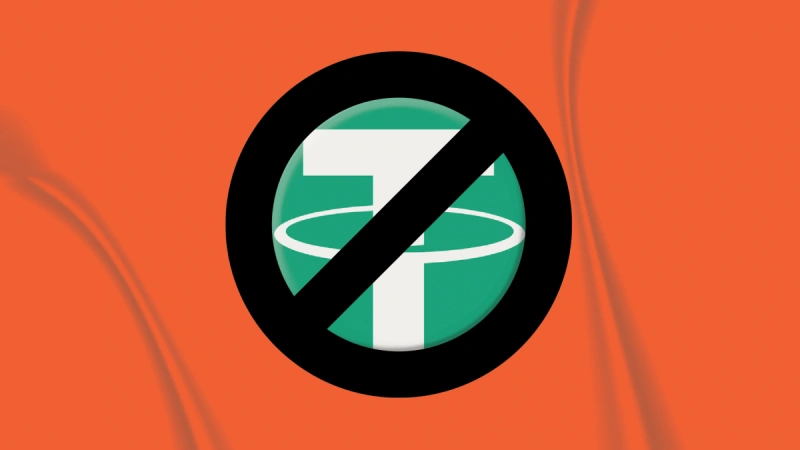
1 Tether froze $344 million in USDT on Tron after wallets were flagged by US law enforcement — one of the largest asset freezes in the stablecoin's history.
Here's the thing nobody says out loud: Tether just proved it can turn off your money. That's either reassuring or terrifying depending on who you are. For regulators, this is exactly what they wanted — a compliant stablecoin issuer acting as a financial cop on the beat. For crypto purists, it's a reminder that $344 million in "decentralized" dollars just got frozen with a phone call. The action came in coordination with OFAC and US law enforcement, and FATF had just warned about growing illicit use of digital dollars. The timing isn't coincidental. Tether is doing what it needs to do to stay on the right side of the incoming US regulatory framework. Whether that makes it more or less trustworthy as a reserve asset is a question worth sitting with.
If Tether releases the specific wallet addresses frozen within the next 7 days, watch whether any connect to known sanctioned entities — that would confirm this is compliance theater with teeth, not just optics. If addresses stay undisclosed, the freeze helps Tether politically but tells us nothing about the actual threat.

2 Bitcoin ETFs just posted a 7-day inflow streak with $1.9 billion flowing in as BTC tests the $80,000 resistance zone — and analysts say the real test starts now.
Seven straight days of ETF inflows is not noise. That's a signal. BlackRock is driving the bulk of it, and whales are buying into the volatility rather than selling it. But here's the second-order question nobody's asking loudly enough: $80K is where a massive supply wall sits. The same traders who bought at $78K to $82K on the way down are now sitting on breakeven or small losses — and they will sell. ETF inflows can absorb a lot, but they can't absorb every profit-taker who's been underwater for weeks all at once. The rally has legs. Whether those legs can carry it through the resistance zone is the only question that matters right now.
If BTC closes above $80K on daily candle with ETF inflows continuing through Friday, the supply wall is cracking and the next level opens up. If price stalls at $79K to $80K for 3 or more days while inflows slow, this is the same fake-out pattern we've seen twice already in 2026.

3 JPMorgan says DeFi's security problem is keeping institutions out — and the data backs it up: persistent exploits and flat ETH-denominated TVL are the two metrics that keep showing up in institutional due diligence rejections.
JPMorgan didn't say anything the on-chain data hasn't been saying for months. DeFi TVL sits at $84 billion total, but measured in ETH it's barely moved. That matters because ETH-denominated TVL strips out the price effect — it tells you whether actual usage is growing. It isn't. And after the Kelp DAO exploit earlier this month drained hundreds of millions, institutions have a fresh data point to justify their hesitation. The BIS piled on today too, warning that crypto exchanges are becoming shadow banks — offering bank-like yield products without deposit insurance or regulatory backstops. Two major institutions saying the same thing in one day isn't a coincidence. It's the establishment coordinating its narrative ahead of US stablecoin and market structure legislation.
If a major US bank announces a DeFi custody or lending product within the next 30 days despite these warnings, the institutional hesitation is performative. If no bank moves and TVL stays flat through end of April, JPMorgan's thesis is the consensus and DeFi's institutional moment is further away than the bulls think.

4 The Kelp DAO exploiter laundered nearly all 75,700 stolen ETH through THORchain — and Andre Cronje's Flying Tulip responded by adding a withdrawal circuit breaker to its own protocol the same day.
Two stories, one thesis: DeFi's security layer is improvising in real time. The Kelp DAO hacker didn't just steal — they laundered through THORchain, a cross-chain protocol that's been used in nearly every major exploit cleanup this cycle. THORchain is the getaway car of DeFi, and nobody's figured out how to stop it without breaking the thing that makes it useful. Meanwhile, Andre Cronje adding a circuit breaker to Flying Tulip is the right instinct — but circuit breakers only work if the attacker doesn't know they exist. The DeFi security arms race is getting faster. Attackers are adapting faster than protocols can patch.
If THORchain governance proposes any address screening or freeze mechanism within the next 14 days, watch whether the community votes it down — that vote will tell you everything about whether DeFi actually wants to stop illicit flows or just wants to look like it does.
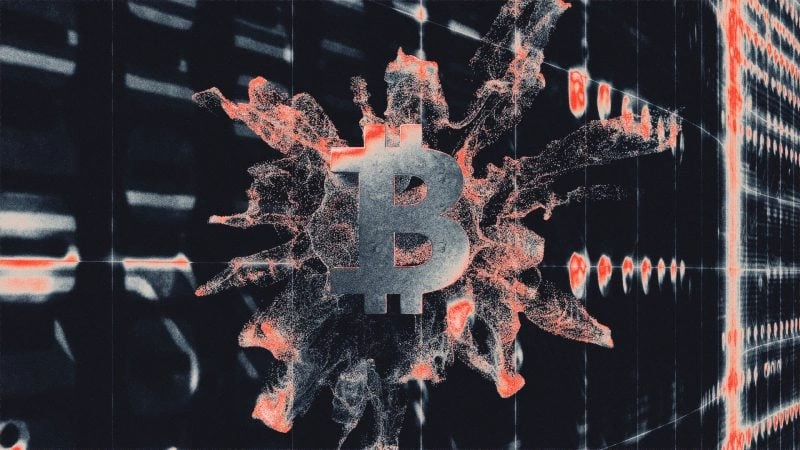
5 The US military is running a live Bitcoin node to test national security applications — confirmed by the Indo-Pacific commander in congressional testimony.
Let that sink in for a second. The same institution that spent years treating Bitcoin as a tool for criminals and sanctions evaders is now running a node to figure out how to use it for national security. This isn't a think tank white paper. This is an admiral telling Congress, on the record, that the US military is actively experimenting with Bitcoin infrastructure. The strategic logic isn't hard to follow: if adversaries are using Bitcoin to move money outside the dollar system, the US military wants to understand the network from the inside. Whether that leads to surveillance capabilities, a strategic reserve argument, or something else entirely — this is a data point that doesn't fit neatly into any existing narrative. File it under: things that matter more than they appear to.
If a follow-up congressional hearing or defense budget line item references Bitcoin infrastructure within the next 30 days, the military node is the start of a formal program, not an experiment. If it disappears from the record, it was a one-off disclosure with no operational follow-through.
5 Quick Hits
- FTX estate sold its Cursor stake for $200K in 2023 — it's now worth $3 billion — The FTX bankruptcy liquidators offloaded the AI coding tool stake at a fraction of its current value, a decision that now looks like one of the most expensive fire sales in crypto history.
- OKX partners with BitGo for off-exchange settlement as it accelerates its US expansion — The integration lets institutional clients hold assets with BitGo as a neutral custodian while trading on OKX, a structure designed to address the counterparty risk concerns that followed FTX's collapse.
- French weather agency filed a police complaint after $35K in Polymarket payouts on suspicious Paris temperature bets — Long-shot bets on daily maximum temperature in Paris paid out after the agency detected sensor interference, raising the question of whether prediction markets can be gamed through physical-world manipulation.
- Sam Bankman-Fried withdrew his motion for a new trial, again accusing Judge Kaplan of bias — SBF pulled the motion rather than let it be ruled on, while reports surfaced that his parents have been lobbying the Trump administration for a pardon behind closed doors.
- Tokenized real-world assets on-chain surpassed $30 billion as institutional capital accelerates adoption — Chainalysis data shows tokenized commodities and other RWAs crossing the $30 billion mark, with institutional allocators treating on-chain RWAs as a mainstream portfolio instrument rather than an experiment.
Risk Map
Catalysts (Next 7 Days)
Token Metrics Podcast
Take the Brief on the Go
Prefer audio in the morning? Get the same Daily Pulse market frame as a fast daily podcast you can finish before the market gets loud.
Daily crypto briefing · Same thesis as the newsletter · Built for commute listening
Daily audio briefing · Spotify · Apple Podcasts · More
Sources
- Tether froze $344 million in USDT on Tron... theblock.co
- Bitcoin ETFs just posted a 7-day inflow streak... cointelegraph.com
- Tether froze $344 million in USDT on Tron... coindesk.com
- Bitcoin ETFs just posted a 7-day inflow streak... theblock.co
- JPMorgan says DeFi's security problem is keeping institutions... theblock.co
- JPMorgan says DeFi's security problem is keeping institutions... coindesk.com
- JPMorgan says DeFi's security problem is keeping institutions... coindesk.com
- The Kelp DAO exploiter laundered nearly all 75,700... cointelegraph.com
- The Kelp DAO exploiter laundered nearly all 75,700... cointelegraph.com
- The US military is running a live Bitcoin... theblock.co
- The US military is running a live Bitcoin... unchainedcrypto.com
- Kevin Warsh Fed Chair confirmation polymarket.com
- api.coingecko.com api.coingecko.com
- api.coingecko.com api.coingecko.com
- api.llama.fi api.llama.fi
- Will Bitcoin reach $110,000 in April? polymarket.com
- Will 4 Fed rate cuts happen in 2026? polymarket.com
Disclosures
Not investment advice. For education only. Crypto is high risk. We may earn affiliate revenue from some links.
