

Token Metrics Premium
Replace the Guesswork
You read the brief. Now get the frameworks, signals, and reports behind the headlines.
Alpha signals · Weekly report · Monthly playbook · Private Discord
Upgrade Now →From $49/mo · Or hold 1M+ $TMAI for free access
Lead Change
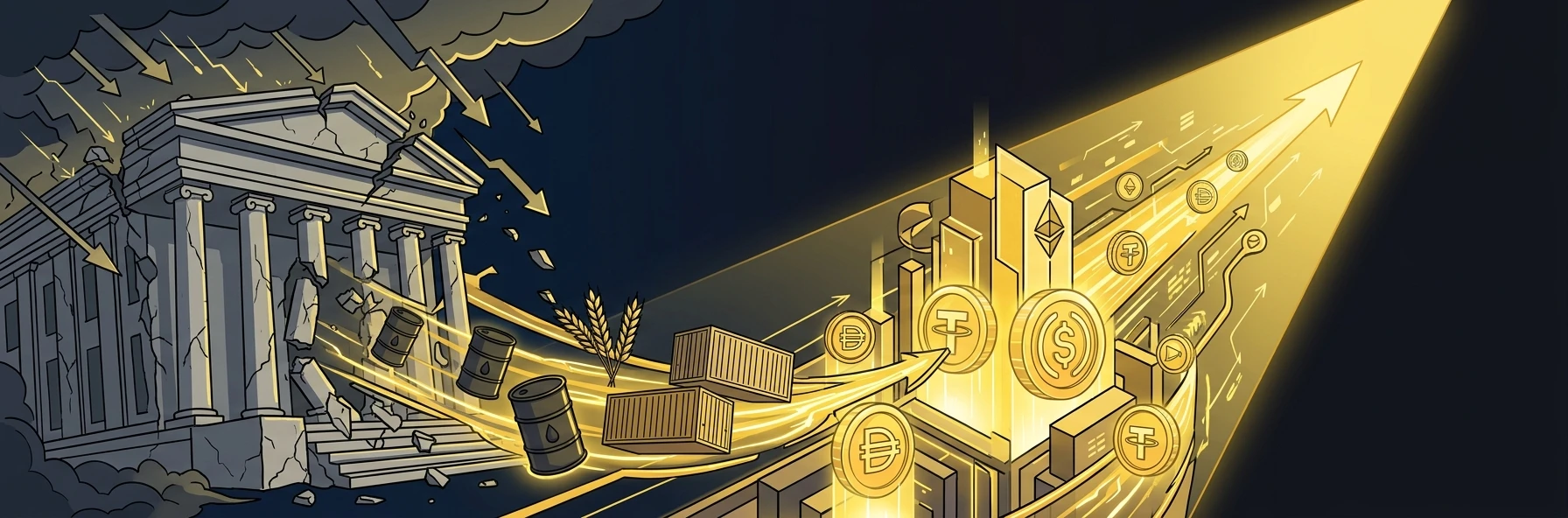
Commodity traders are getting debanked over Iran exposure — and stablecoins are the only rail still open.
Market Snapshot
BTC at $71K, down 2% across the board — every major asset red in lockstep. That's not a rotation, that's a risk-off flush.
What Prediction Markets Think
Prediction markets are painting a split picture: money is nearly 50/50 on Bitcoin hitting $75K this month while giving Ethereum virtually no chance at $4K. The Powell removal odds at 2% suggest traders aren't pricing political Fed risk — even as that narrative dominates the headlines.
Data from Polymarket prediction markets • Prices reflect real-money bets
Sponsored

Polymarket — Bet on real-world events with real money on the world's prediction market.
Predict & Earn →5 Changes That Matter

1 Commodity traders caught in the Iran war crossfire are getting debanked — and turning to stablecoins to keep their businesses alive.
This is the use case stablecoin advocates have been pitching for years, finally showing up in the real world. When traditional banks won't touch your transactions because of geopolitical exposure, you find another rail. Commodity traders dealing with Iran-adjacent counterparties are getting accounts closed, and stablecoins are stepping in as the path of least resistance. This isn't speculative adoption. It's survival adoption. The kind that sticks. It also raises a structural question: if stablecoins become the default settlement layer for sanctioned-adjacent trade flows, regulators are going to have a very uncomfortable conversation about what 'compliance' actually means when the compliant option is unavailable.
If stablecoin transfer volumes tied to commodity trade corridors rise measurably over the next 7 days while bank derisking headlines continue, this is a structural shift, not an anecdote. If volumes stay flat, it's a few traders talking to reporters.

2 WLFI's $75 million DeFi loan is drawing fire from two directions at once: Justin Sun calling it an ATM for insiders, and U.S. senators asking pointed questions about the Mar-a-Lago gala.
Here's what we know. World Liberty Financial — the Trump-backed DeFi project — has an enormous borrow position on-chain. Justin Sun, who himself has a blacklisted address and has reportedly taken significant losses on related positions, is now publicly calling WLFI's structure predatory toward users. That's a bit like a pyromaniac criticizing someone else's fire safety record. But the senators' questions are harder to dismiss. When lawmakers start connecting a DeFi protocol's loan mechanics to a presidential gala's guest list, that's not a DeFi story anymore. That's a corruption optics story that happens to involve DeFi. The protocol's defenders say the borrow position is standard. Maybe. But 'standard' doesn't usually require a Senate inquiry.
If Senate letters escalate to formal investigation requests within 7 days, WLFI faces a regulatory overhang that could freeze institutional interest in the project. If the letters go unanswered and the news cycle moves on, this was noise. Watch whether any on-chain movement on the borrow position happens before or after political pressure peaks.

3 North Korea keeps stealing billions in crypto — not despite operating in the open, but because of it.
This is the part that should make you uncomfortable. North Korean hacking groups aren't hiding. Chainalysis, the FBI, and multiple blockchain analytics firms can trace their wallets in near real-time. They don't care. The Lazarus Group's approach is essentially: move fast, use mixers, convert to stablecoins, cash out through exchanges with weak KYC in jurisdictions that don't cooperate with U.S. subpoenas. The crypto industry's transparency, the thing we celebrate, is simultaneously the thing that lets researchers watch the theft happen live and do almost nothing about it. The structural problem isn't the tracing. It's the off-ramps. Until the weakest-link exchanges get shut down or sanctioned into compliance, the heist pipeline stays open.
If the U.S. Treasury issues new exchange sanctions targeting North Korea's preferred off-ramp jurisdictions within the next 30 days, look for stablecoin issuer responses. Forced freezes on flagged addresses would be the tell that the system is actually tightening. If nothing changes, the status quo holds.

4 The CLARITY Act is back — and this time crypto's biggest names are lining up behind it.
Coinbase is publicly backing the Trump administration's push for the CLARITY Act, which would establish cleaner jurisdictional lines between SEC and CFTC oversight of digital assets. That's not surprising. Coinbase has been fighting this battle in court for years. What's more interesting is the timing. Congress is returning from recess this week with stablecoin legislation already in active negotiation. Market structure clarity and stablecoin rules moving in parallel is either a genuine regulatory sprint or a political photo op before midterms. The difference matters enormously. A real CLARITY Act would tell builders which regulator they're dealing with. A stalled one just means more enforcement by ambiguity, which is how we got here.
If stablecoin legislation gets a Senate floor vote scheduled within the next 7 days, market structure legislation likely follows in the same session window. If the stablecoin bill stalls again over the 'rewards' provision dispute, CLARITY Act momentum fades with it.
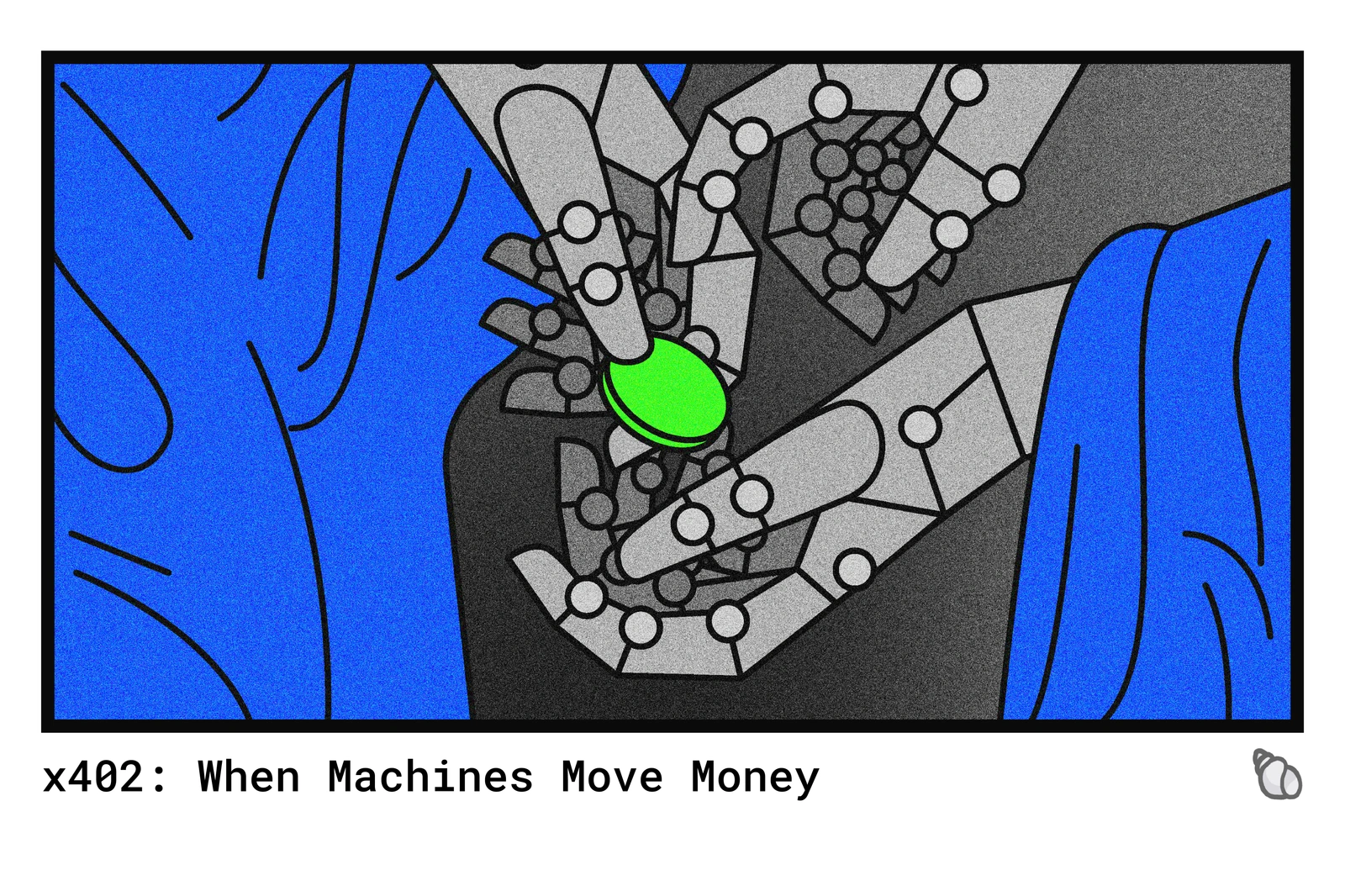
5 AI agents are quietly reshaping how crypto protocols get built, traded, and stress-tested — and the infrastructure layer is starting to matter.
The conversation used to be about AI tokens going up. Now it's about AI agents actually doing things: writing smart contract code, running trading strategies, flagging risk in DeFi positions before humans notice. Cambrian and the Ethereum Foundation are both talking about agents not as a narrative but as a development tool. That's a meaningful shift. When the people building the infrastructure start using the tools, the tools tend to get better fast. The risk is the same as any agentic system operating with real money: a hallucinated transaction or a misread market condition doesn't just cost compute cycles. It costs capital. The security question for AI-powered crypto tooling is still almost entirely unanswered.
If a major protocol announces an AI agent-related exploit or unintended behavior within the next 30 days, the narrative flips from 'efficiency gain' to 'attack surface.' If adoption keeps growing without incident, the infrastructure plays, not the AI tokens, are where the structural value is building.
5 Quick Hits
- Tether's U.S. CEO is tied to a super PAC that just made its first ad buy — Tether money entering U.S. political advertising is the kind of story that will get louder as stablecoin legislation moves through Congress — the timing is not subtle.
- A mempool-based Space Invaders clone will pay real Bitcoin to skilled players — up to $7 for moving 10,000 BTC — It's a gimmick, but it's a gimmick that demonstrates how Bitcoin's mempool can be used as a programmable incentive layer, which is more interesting than the game itself.
- 'Not Going to Stop at Bitcoin': Morgan Stanley Weighs Tokenization, Tax Solutions in Crypto Push — Morgan Stanley moving beyond Bitcoin into tokenization signals that TradFi's crypto ambitions are broader than spot ETF exposure. The tax solutions angle suggests they're building for client retention, not just asset allocation.
- New Tools Aim to Make AI 'Vibe Coding' Safer for Crypto — Vibe coding — AI-assisted rapid prototyping — is already being used to write smart contract code, and the security implications for crypto are real. Tools that add guardrails here are filling a gap the industry hasn't formally addressed yet.
- Economists Said AI Wouldn't Take Jobs—Some Now Admit They Got It Wrong — Economists revising their AI-and-jobs thesis matters for crypto because the same models underpin assumptions about AI token demand and agent utility. If the macro labor story is wrong, the AI narrative in crypto may be priced on a flawed foundation.
Risk Map
- 🔴 Broad risk-off flush with no divergence: Every major asset is down in lockstep today — BTC, ETH, SOL, HYPE, ADA, BCH all red. When nothing is holding up, it's not sector rotation. It's a sentiment reset. The danger is that traders waiting for 'the dip' keep waiting as the dip extends.
- 🔴 WLFI borrow position meets political scrutiny: A large on-chain borrow position tied to a politically connected DeFi project, now under Senate inquiry and publicly criticized by a sanctioned counterparty, is a structural overhang. If the position needs to be unwound under political pressure, the on-chain mechanics could move markets in ways the headlines won't predict.
- 🔴 Stablecoin legislation stalls again on the 'rewards' clause: This week is described as critical for crypto bill negotiations. If lawmakers can't resolve the stablecoin rewards dispute before the recess window closes, the entire regulatory clarity sprint resets — and uncertainty is the market's least favorite macro condition.
Catalysts (Next 7 Days)
- 📅 WLFI Senate inquiry response deadline (Next 7 days): Senators have raised formal questions about the Mar-a-Lago gala and WLFI's borrow mechanics — any official response or escalation moves this from political noise to regulatory event.
- 📅 Polymarket Bitcoin $75K April resolution (April 30): With BTC at $71K and money sitting at roughly 55% odds on a $75K April close, the next two weeks of price action either validate or collapse the most-watched near-term bet in prediction markets.
Token Metrics Podcast
Take the Brief on the Go
Prefer audio in the morning? Get the same Daily Pulse market frame as a fast daily podcast you can finish before the market gets loud.
Daily crypto briefing · Same thesis as the newsletter · Built for commute listening
Daily audio briefing · Spotify · Apple Podcasts · More
Sources
- Commodity traders caught in the Iran war crossfire... coindesk.com
- Commodity traders caught in the Iran war crossfire... chainalysis.com
- WLFI's $75 million DeFi loan is drawing fire... coindesk.com
- WLFI's $75 million DeFi loan is drawing fire... coindesk.com
- WLFI's $75 million DeFi loan is drawing fire... protos.com
- WLFI's $75 million DeFi loan is drawing fire... bankless.com
- North Korea keeps stealing billions in crypto —... coindesk.com
- North Korea keeps stealing billions in crypto —... chainalysis.com
- The CLARITY Act is back — and this... bankless.com
- The CLARITY Act is back — and this... coincenter.org
- AI agents are quietly reshaping how crypto protocols... shoal.gg
- Polymarket Bitcoin $75K April resolution polymarket.com
- api.coingecko.com api.coingecko.com
- api.coingecko.com api.coingecko.com
- api.llama.fi api.llama.fi
- polymarket.com polymarket.com
- polymarket.com polymarket.com
Disclosures
Not investment advice. For education only. Crypto is high risk. We may earn affiliate revenue from some links.
