

Sponsored

Kraken — Institutional-grade security since 2011 with zero major hacks.
Trade Securely Now →Lead Change
SEC and CFTC sign first-ever joint crypto MOU — as Aave loses $50M in a swap gone wrong and BTC posts its best week since September 2025.
Market Snapshot
BTC is on its best weekly run since September 2025, and the correlation with tech stocks is visibly weakening. ETH and SOL are outperforming on the day — altcoins catching a bid when BTC dominance sits at 56.93% is worth watching.
Narratives Snapshot
DePIN is the week's standout with +24.73% market cap growth — infrastructure narratives are outperforming speculation. AI at +15.08% confirms the theme has legs beyond hype.
What Prediction Markets Think
Prediction markets are pricing 40.5% odds on BTC hitting $100K by year-end and 32% on ETH reaching $4K — meaningful but not high-conviction bets. The macro picture is cleaner: a March Fed cut is essentially priced out at 0.4%, meaning Thursday's decision is all about tone, not action.
Data from Polymarket prediction markets • Prices reflect real-money bets
Sponsored

Polymarket — Bet on real-world events with real money on the world's prediction market.
Predict & Earn →5 Changes That Matter
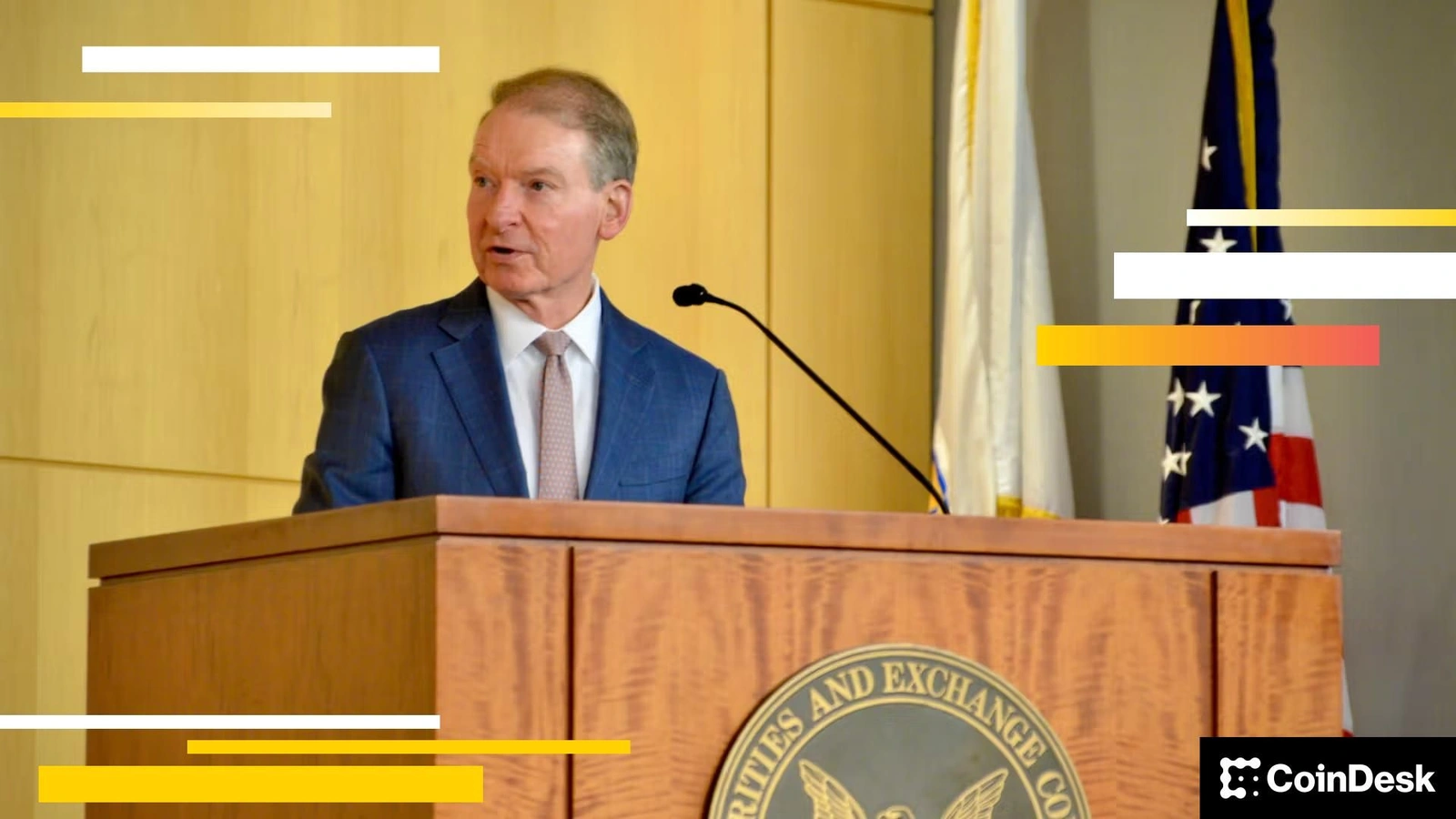
1 The SEC and CFTC signed a memorandum of understanding to coordinate their approach to digital asset regulation — the first formal joint framework between the two agencies.
This is the regulatory equivalent of two rival fire departments finally agreeing on who owns which hydrant. For years, crypto's biggest structural risk wasn't enforcement — it was jurisdictional chaos. Projects didn't know if they were a commodity, a security, or something in between. Now the two agencies are at least talking to each other in writing. That's not a green light. But it's the first step toward a rulebook that doesn't change depending on which building you walk into. The CLARITY Act debate suddenly has a new backdrop: if the agencies are coordinating, Congress has less excuse to stall. The firms that built compliance infrastructure early — the Coinbases, the Krakens — just got a quiet competitive moat. Everyone else is scrambling.
If the SEC and CFTC publish joint guidance or a shared taxonomy within the next 30 days, the coordination is substantive. If this MOU produces no follow-on action by mid-April, it's a press release wearing a policy costume.
2 Aave and CowSwap published dueling post-mortems after a $50M token swap went catastrophically wrong — and now Aave is rolling out a new protection mechanism in response.
Here's the uncomfortable truth about this story: $50M didn't get hacked. It got lost in a swap. That's arguably worse. Hacks are external threats. This was a protocol doing what it was designed to do — just not what anyone intended. The fact that Aave and CowSwap published dueling post-mortems tells you everything: nobody agrees on whose fault it was, which means nobody's fully fixing it. The new protection mechanism sounds reassuring until you realize it's a product born from embarrassment, not foresight. The deeper issue is that DeFi composability — the thing everyone celebrates — is also the thing that turns a bad swap into a $50M disaster. Every protocol that plugs into another protocol inherits its failure modes. That's not a bug. That's the architecture.
If Aave TVL holds above current levels within the next 7 days despite the incident, user confidence is intact and the new protection mechanism is doing its job. If TVL drops meaningfully, the market is voting that the post-mortem wasn't convincing enough.

3 Bitcoin is on track for its best week since September 2025, and its correlation with tech stocks is visibly weakening — even as Middle East tensions push oil higher.
Two weeks ago, BTC was trading like a leveraged Nasdaq ETF. Today it's doing something different: holding ground while risk assets wobble on oil price spikes and geopolitical noise. That's not a coincidence — that's a narrative shift in real time. Analyst commentary this week has turned more bullish — but the more important signal is in the price action itself. The macro backdrop that was supposed to crush crypto — rising oil, Middle East risk, Fed uncertainty — is instead providing cover for BTC to decouple. When an asset stops going down on bad news, pay attention. Historically, that kind of resilience has preceded trend shifts — but macro conditions can reverse quickly.
If BTC closes the week above $72,000 while the S&P 500 posts a weekly loss, the decoupling thesis has a data point. If BTC sells off in lockstep with equities on any macro shock in the next 7 days, the correlation break was temporary.

4 Nasdaq and the owner of the NYSE are putting the $126 trillion equity market on blockchain — and they're not being subtle about why.
When the two largest stock exchange operators on the planet start talking about tokenizing equities, the RWA narrative stops being a crypto-native talking point and becomes a TradFi infrastructure story. The $126 trillion number is almost too big to process — it's roughly 50 times the entire crypto market cap. The question isn't whether this happens. It's who controls the rails when it does. If Nasdaq and NYSE build their own chains or use permissioned infrastructure, crypto-native protocols get cut out. If they build on public chains — or use bridges to them — the entire DeFi stack becomes settlement infrastructure for global finance. That's the fork in the road. And right now, nobody knows which path they're taking.
If either exchange announces a specific blockchain partner or testnet within the next 30 days, the direction becomes clear. Public chain selection would be a major catalyst for that ecosystem. Permissioned chain selection means crypto-native protocols stay on the outside looking in.

5 A probe into Argentine President Milei revealed a document detailing an alleged $5 million deal linking him to the promotion of the Libra token — with forensic call logs showing frantic communication in the hours surrounding the token's collapse.
This is the meme coin political scandal that keeps getting worse. The original Libra story was bad enough: a token promoted by a sitting head of state that subsequently collapsed. Now there's a document trail and forensic phone records. That's not a rumor — that's evidence in a probe. The broader implication for crypto is uncomfortable: every time a politically connected token blows up, it hands regulators a case study. The CLARITY Act debate, the SEC-CFTC coordination, the stablecoin bills — they all get harder to pass when the headline is 'president allegedly paid to pump a token that then crashed.' This isn't just a Latin American political story. It's ammunition.
If the Milei probe produces formal charges or a congressional referral within the next 30 days, expect it to surface in US regulatory hearings as a cautionary example. If the story stalls at the document-leak stage, the political fallout stays contained to Argentina.
5 Quick Hits
- Venus Protocol hit by $3.7M supply cap attack, left with roughly $2M in bad debt — An attacker manipulated the price of the THENA token to exploit Venus Protocol's supply cap mechanism — a reminder that oracle-dependent lending protocols carry tail risk that TVL numbers don't capture.
- Ethereum Foundation sold 5,000 ETH to Bitmine in a $10M OTC deal — The EF offloading ETH via OTC to a publicly traded mining company is an unusual move — it keeps selling pressure off the open market while raising questions about the Foundation's treasury strategy.
- Custodia Bank's five-year fight for a Fed master account ends in a 7-3 appeals court loss — The ruling effectively confirms that crypto-native banks cannot access the Federal Reserve's payment rails directly — a structural barrier that forces crypto firms to rely on traditional bank intermediaries.
- Ledger and MoonPay let users approve AI agent crypto transactions on hardware wallets — Putting a hardware wallet between an AI agent and its spending limit is the kind of practical safety rail the agentic crypto space has been missing — expect this pattern to spread fast.
- CLARITY Act faces criticism for potentially handing crypto to centralized players, per Gnosis exec — The concern is that the Act's compliance requirements create moats for well-capitalized incumbents while squeezing out smaller decentralized protocols — the exact opposite of what crypto was built for.
Risk Map
- 🔴 DeFi composability is a hidden systemic risk: Two DeFi failures in one day — Aave's $50M swap disaster (a protocol design failure, not a hack) and Venus Protocol's $3.7M supply cap exploit — both stem from the same architectural feature: protocols trusting other protocols. When everything is composable, failure modes are composable too. The more TVL concentrates in interconnected protocols, the bigger the blast radius when something breaks.
- 🔴 BTC decoupling from equities is real but fragile: Bitcoin's best week since September 2025 is happening against a backdrop of rising oil prices and geopolitical tension — assets that historically drag risk assets lower. That's genuinely unusual. But decoupling narratives have a short shelf life. One bad CPI print or a Fed surprise on March 18 could snap the correlation back instantly. Don't mistake a few days of divergence for a structural regime change.
- 🔴 Political token scandals are regulatory ammunition: The Milei-Libra probe now has documents and forensic phone records. Every politically connected token collapse that produces a paper trail becomes a case study in congressional hearings. The SEC-CFTC coordination MOU signed this week didn't happen in a vacuum — the political pressure to 'do something' about crypto is building from multiple directions simultaneously.
Catalysts (Next 7 Days)
- 📅 Federal Reserve Rate Decision (March 18, 2026): Polymarket puts the probability of a March rate cut at 0.4% — essentially zero. But the Fed's language on future cuts and inflation tolerance will set the risk-asset tone for the next six weeks. A hawkish surprise could snap BTC's decoupling narrative immediately.
- 📅 SEC-CFTC Joint Framework Follow-On (Within 30 days of March 15 MOU signing): The memorandum of understanding is only meaningful if it produces concrete guidance. Any joint taxonomy or enforcement coordination announcement would be the most significant US regulatory development for crypto in years.
- 📅 Aave Protection Mechanism Launch (Coming days following March 15 announcement): Aave is the largest DeFi lending protocol by TVL. How the market receives the new protection mechanism — and whether TVL stabilizes or bleeds — will signal whether the $50M swap incident damaged user confidence in the protocol or just its PR.
Token Metrics Premium
Choose Your Edge
Free gives you the view.
Premium gives you the work product.
Weekly Q&A Digest · Monthly Playbook · Alpha Signals · Private Discord
Explore Premium →From $49/mo · Or hold 1M+ $TMAI for free access
Sources
- The SEC and CFTC signed a memorandum of... coindesk.com
- Aave and CowSwap published dueling post-mortems after a... theblock.co
- Bitcoin is on track for its best week... coindesk.com
- Aave and CowSwap published dueling post-mortems after a... cointelegraph.com
- Bitcoin is on track for its best week... decrypt.co
- Bitcoin is on track for its best week... coindesk.com
- Nasdaq and the owner of the NYSE are... coindesk.com
- A probe into Argentine President Milei revealed a... theblock.co
- Federal Reserve Rate Decision polymarket.com
- api.coingecko.com api.coingecko.com
- api.coingecko.com api.coingecko.com
- defillama.com defillama.com
- polymarket.com polymarket.com
- polymarket.com polymarket.com
Disclosures
Not investment advice. For education only. Crypto is high risk. We may earn affiliate revenue from some links.
