


Token Metrics Premium
Replace the Guesswork
You read the brief. Now get the frameworks, signals, and reports behind the headlines.
Alpha signals · Weekly report · Monthly playbook · Private Discord
Upgrade Now →From $49/mo · Or hold 1M+ $TMAI for free access
Lead Change
BTC hit $75K yesterday. Today it's back at $74K. The IMF just cut global growth forecasts. Memes are up 12% this week. The market is sending three different signals at once.
Market Snapshot
BTC is stuck in a tight band just below $75K — yesterday's ceiling is today's resistance. ETH and SOL are bleeding slightly harder than BTC, which is what you'd expect when the market is in a 'wait and see' mode.
Narratives Snapshot
The narrative picture this week is a tale of two markets. Memes are up 12% and Liquid Staking Governance tokens are up 15% — both speculative, both showing genuine capital interest.
What Prediction Markets Think
Prediction markets are sending a split signal: 65% probability on BTC hitting $95K in April sits alongside a near-zero probability of the Fed cuts that would typically fuel that kind of move. Either the BTC bull case is completely decoupled from macro, or one of these markets is badly mispriced.
Data from Polymarket prediction markets • Prices reflect real-money bets
Sponsored

Kraken — Institutional-grade security since 2011 with zero major hacks.
Trade Securely Now →5 Changes That Matter
1 BTC touched $75K for the first time since February — then immediately pulled back. $411 million in ETF inflows followed. Analysts are calling for caution.
Here's the uncomfortable math: BTC hit a psychologically significant level, ETF money poured in at exactly the wrong moment, and the price couldn't hold. That's not a breakout. That's a squeeze. The $411M in ETF inflows after the $75K touch looks like retail FOMO chasing institutional exits. The analysts urging caution aren't wrong — when a milestone becomes a ceiling three times in a row, the fourth attempt needs a different catalyst. K33 Research notes the negative funding streak mirrors prior bottoming regimes, which is the one genuinely bullish data point in an otherwise cautious setup.
If BTC closes above $75K on daily volume above the 7-day average within the next 5 days, the breakout is real. If it tags $75K again and reverses on declining volume, the ceiling is structural — and the next meaningful level to watch is the $71K support from the sparkline base.
2 The IMF just issued a global debt warning that directly reprices the macro backdrop for Bitcoin — and not in the way bulls want.
The IMF's global debt warning is the kind of macro event that cuts both ways for crypto, and most people are reading only one side. The bearish read: rising sovereign debt stress tightens financial conditions globally, risk assets sell off, BTC goes with them. That's the obvious take. The second-order read is more interesting: if the IMF is right that debt loads are unsustainable, the long-term case for a scarce, non-sovereign asset gets stronger — not weaker. Howard Marks would call this the difference between the event and the implication of the event. The market is pricing the former. The smarter trade might be positioned around the latter. But 'smarter' and 'sooner' are not the same thing, and macro headwinds don't resolve in a week.
If US Treasury yields rise further in the next 7 days while BTC holds above $72K, the decoupling narrative gets real traction. If yields spike and BTC drops below $72K, it's still a risk asset — full stop.

3 World Liberty Financial — the Trump-backed DeFi project — is proposing to unlock $6.2 billion in tokens. Yes, billion.
Let's be precise about what's happening here. WLFI already borrowed $75M against its own token earlier this month. Now it wants to unlock $6.2 billion more tokens into a market that's already skeptical. This is either a sophisticated treasury management strategy or the most aggressive self-dealing in DeFi history — and the line between those two things in crypto governance is thinner than it should be. The project has political cover that most DeFi protocols don't, which makes it harder to apply normal market discipline. What happens when a protocol's largest risk factor is also its most powerful protective moat? That's the question the market hasn't priced yet.
If the governance vote passes and WLFI token price holds within 10% of pre-announcement levels over the next 7 days, the market is treating this as legitimate treasury activity. If the token drops more than 20% post-unlock announcement, the market is voting with its exits — and that's a signal worth watching for contagion into politically-adjacent DeFi projects.
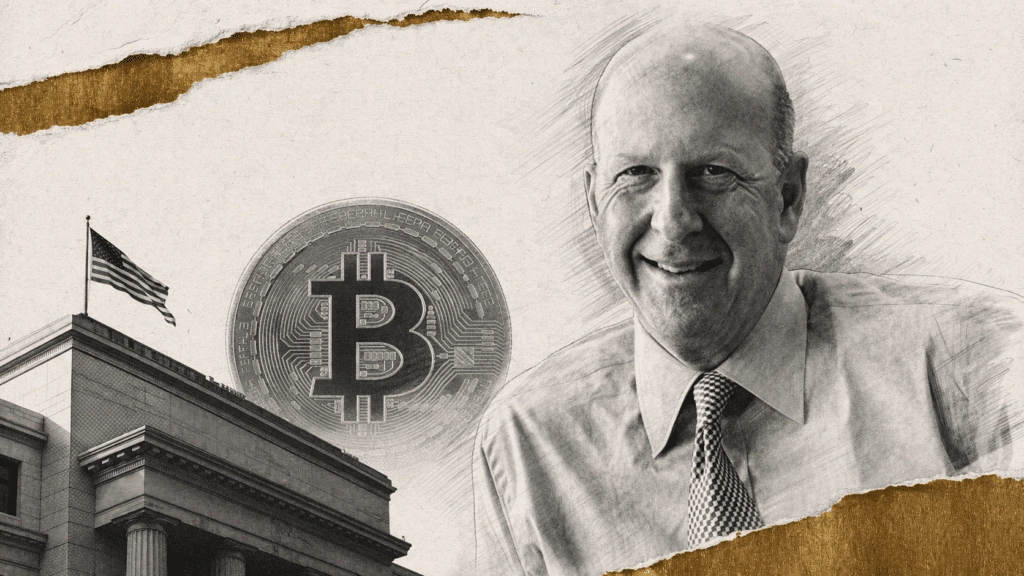
4 Goldman Sachs filed a preliminary prospectus for a Bitcoin Premium Income ETF. CoinDesk separately argues income ETFs could be BTC's volatility kill switch.
This is the most structurally interesting BTC product development in months, and it's getting less attention than it deserves. A Bitcoin income ETF — essentially a covered-call strategy on BTC — does something no spot ETF can: it gives yield-hungry institutional allocators a reason to hold BTC that isn't just 'number go up.' Pension funds and endowments have mandates that require income. A covered-call BTC ETF speaks that language. The volatility kill switch argument is real too: if enough institutional money is selling covered calls on BTC, you structurally suppress the upside spikes — but you also dampen the downside panics. Whether that's good or bad depends entirely on whether you're a trader or a long-term holder.
If the Goldman filing advances to SEC review within 30 days and other major asset managers file similar products within that window, income-generating BTC products are becoming a product category, not a one-off. If the filing stalls or gets pushback, it's a reminder that even Goldman can't fast-track the SEC.
5 CoW Swap was hit by a DNS hijack that redirected its frontend to a malicious site. Users were warned to stay away.
DNS hijacks are the cockroaches of DeFi security: they're not sophisticated, they're not novel, and they keep happening anyway. The attack vector isn't the smart contract — it's the domain registrar. Your code can be perfect and your users can still get drained because someone social-engineered a domain provider. CoW Swap caught it and warned users quickly, which is the best-case scenario for a worst-case attack type. But this is a reminder that 'audited smart contracts' and 'safe to use' are not synonyms. The frontend is the attack surface most protocols ignore. Until the industry standardizes on ENS-based or IPFS-pinned frontends, this attack will keep working.
If CoW Swap publishes a post-mortem within 48 hours detailing how the DNS was compromised and what changes they're making, the protocol handled this correctly. If the post-mortem is vague or delayed beyond 72 hours, treat that as a governance and transparency red flag for any protocol using the same infrastructure stack.
5 Quick Hits
- Virginia governor signs law protecting dormant crypto from forced liquidation — The new law gives crypto holders up to a year before dormant assets can be seized — a meaningful protection for long-term holders and cold-storage users who don't actively transact.
- Tether debuts 'People's Wallet' targeting self-custody at scale — Tether building a consumer self-custody product while also issuing the world's largest stablecoin is either a brilliant vertical integration play or a conflict of interest waiting to be examined — the market hasn't decided which yet.
- Frankfurt Stock Exchange operator announces $200 million investment in Kraken — One of Europe's oldest financial infrastructure players putting $200 million into a crypto exchange is the kind of TradFi-crypto convergence that doesn't get enough attention when Bitcoin price headlines dominate.
- Elizabeth Warren Warns Elon Musk's X Money Threatens 'Stability of the Financial System' — Developing story.
- Morning Minute: The Next Fed Chair Has a Crypto Portfolio — Developing story.
Risk Map
Catalysts (Next 7 Days)
Token Metrics Podcast
Take the Brief on the Go
Prefer audio in the morning? Get the same Daily Pulse market frame as a fast daily podcast you can finish before the market gets loud.
Daily crypto briefing · Same thesis as the newsletter · Built for commute listening
Daily audio briefing · Spotify · Apple Podcasts · More
Sources
- BTC touched $75K for the first time since... coindesk.com
- The IMF just issued a global debt warning... coindesk.com
- BTC touched $75K for the first time since... decrypt.co
- World Liberty Financial — the Trump-backed DeFi project... coindesk.com
- World Liberty Financial — the Trump-backed DeFi project... bankless.com
- Goldman Sachs filed a preliminary prospectus for a... unchainedcrypto.com
- Goldman Sachs filed a preliminary prospectus for a... coindesk.com
- CoW Swap was hit by a DNS hijack... protos.com
- CoW Swap was hit by a DNS hijack... bankless.com
- CoW Swap was hit by a DNS hijack... unchainedcrypto.com
- Prediction market volume milestone tracking — Bernstein $1T by 2030 thesis coindesk.com
- api.llama.fi api.llama.fi
- polymarket.com polymarket.com
- polymarket.com polymarket.com
- polymarket.com polymarket.com
Disclosures
Not investment advice. For education only. Crypto is high risk. We may earn affiliate revenue from some links.
