
Sponsored by



Lead Change
BTC hits a 3-month high above $82K. Zcash up 34% on Multicoin backing. Fear & Greed slipped 4 points to 46. The market is moving up while sentiment moves sideways.

Market Snapshot
BTC pushed to a 3-month high above $82K on geopolitical tailwinds - a US-Iran agreement report sent risk assets higher. SOL was the standout among majors, up nearly 5%.
Alpha Spotlight
Bitcoin · BTC
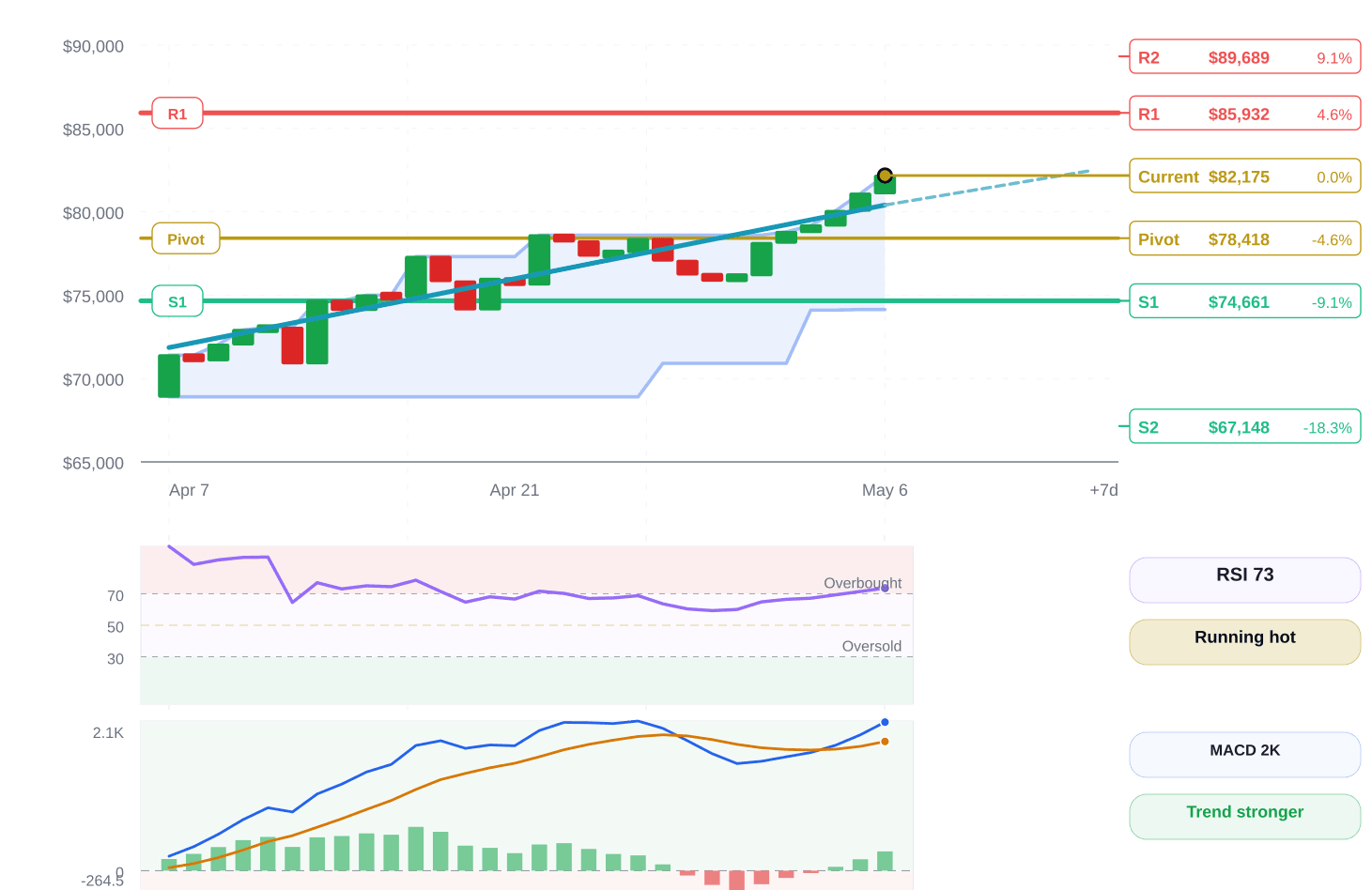
Bitcoin led the majors at 8.3% this week.
Bitcoin is trading near $82K, and the broader structure is still leaning higher. The price moved 8.3% over the last 7 days, keeping the narrative in an active rotation rather than a flat consolidation. The move is getting crowded enough that upside may come in shorter bursts rather than a straight line.
5 Changes That Matter

1 Bitcoin cleared $82K for the first time in three months, driven by reports of a US-Iran nuclear agreement - a direct geopolitical risk-off unwind.
This is the mirror image of May 4th's session, when an Iran missile report knocked BTC back from $80K. Now the same geopolitical variable is the tailwind instead of the headwind. The move matters structurally because it came alongside BTC dominance climbing roughly 1 percentage point - meaning this wasn't a broad altcoin party. It was targeted, deliberate buying in the asset people reach for when macro uncertainty clears. The question now is whether this is a genuine ceiling break or another head-fake. K33 flagged earlier this week that BTC has been in its longest negative funding streak this decade - which historically precedes sharp short squeezes, not sustained rallies. If shorts are still loaded up here, the next leg could be violent.
If BTC holds above $82K with funding rates staying negative or neutral for the next 48 hours, shorts are getting squeezed and the move is real. If funding flips sharply positive while price stalls at this level, it's leveraged longs piling in late - and that's the setup for a fast reversal.

2 Zcash surged 34% to $574 after Multicoin Capital disclosed a significant investment, dragging Monero up 5.5% in sympathy - the biggest privacy coin day in years.
Privacy coins don't move like this on vibes alone. Multicoin's bet is a thesis statement: that regulatory clarity is coming fast enough that privacy-preserving blockchains are now a feature, not a liability. That's a genuinely contrarian read. Most institutional money has been running away from privacy coins for three years over compliance concerns. Multicoin is betting the compliance window is opening back up - or that the narrative around financial privacy is shifting in a world where surveillance is expanding everywhere. The liquidation data tells the other side of the story: ZEC shorts got absolutely torched, with Zcash bets becoming the second-largest liquidations behind Bitcoin today. This move was partly fundamental and partly a short squeeze. The question is which part has legs.
If ZEC holds above $500 over the next 7 days without a fresh Multicoin position disclosure or regulatory catalyst, the move was mostly short liquidations and will fade. If other major funds disclose privacy coin exposure in the same window, the thesis is spreading - and Monero becomes the second trade.
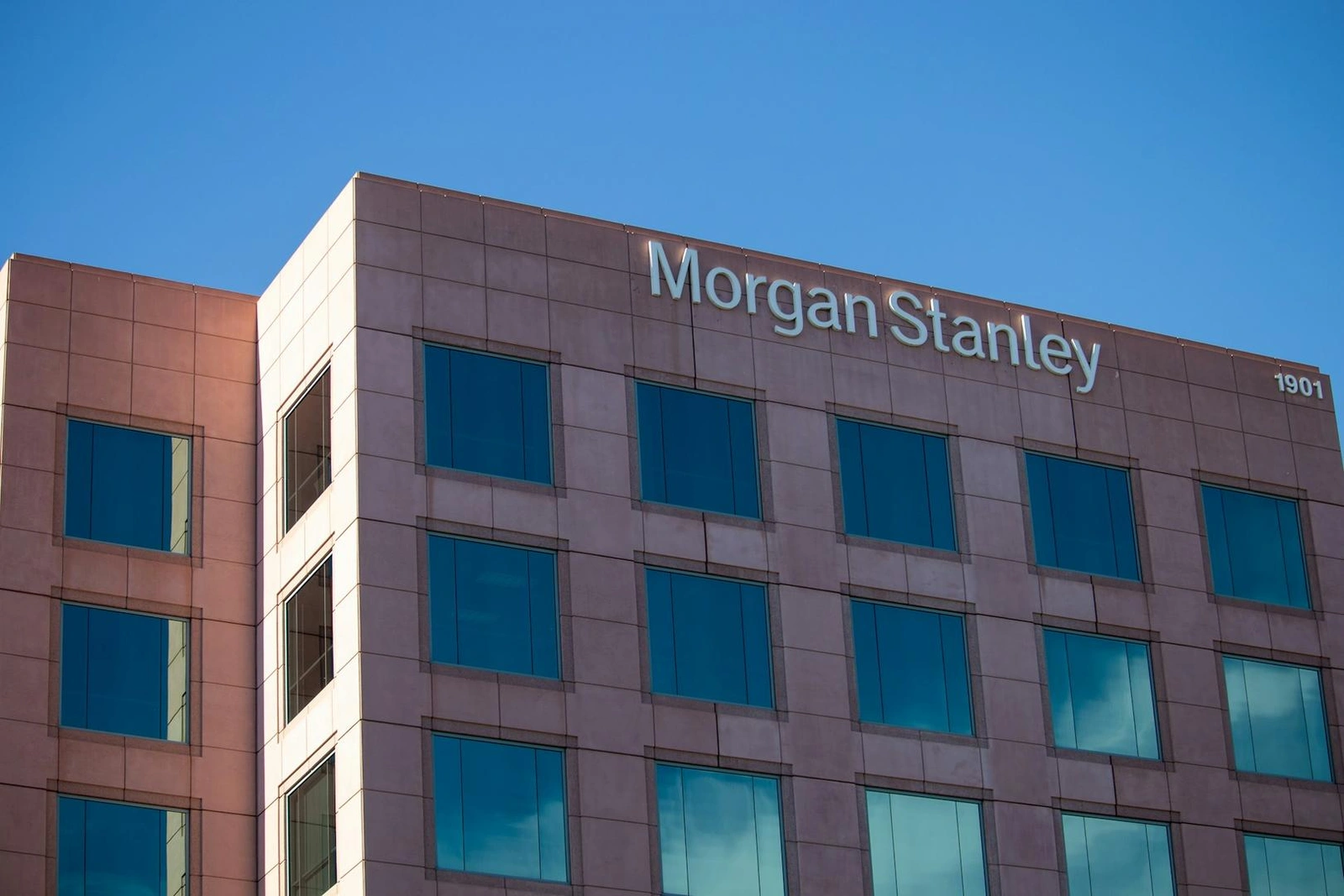
3 Morgan Stanley is launching crypto trading with fees lower than competitors - putting a full-service Wall Street bank directly in the retail crypto brokerage business.
This is the quiet structural story of the week. Morgan Stanley has 15,000+ financial advisors and roughly 8 million client accounts. When those advisors can offer crypto trading inside the same platform where clients hold their IRAs and brokerage accounts, the distribution flywheel is enormous. The fee angle is the tell: Morgan Stanley isn't doing this reluctantly. They're pricing to win market share. That's a different posture than the 'we're offering this because clients asked' language from 2022. The competitive pressure on Coinbase and dedicated crypto exchanges just got real. Why pay exchange fees and manage a separate wallet when your existing broker handles it cheaper? The answer used to be 'self-custody' - but most retail investors never wanted that anyway.
Watch Coinbase's retail volume figures over the next 30 days. If Morgan Stanley's launch coincides with a measurable drop in Coinbase's US retail trading share, the incumbents have a real competitive problem. If volumes hold, TradFi crypto distribution is additive - not cannibalistic.

4 CME Group is launching regulated Bitcoin volatility futures - a product that lets traders bet on BTC's price swings independently of BTC's price direction.
This is a genuinely new instrument for the market. Right now, if you want to trade BTC volatility, you're doing it through options - which requires understanding Greeks, managing delta, and timing decay. CME's volatility futures let you take a pure view on 'will BTC be volatile?' without the complexity. That matters because volatility itself has become a tradable thesis in crypto. When BTC was grinding between $75K and $82K for weeks, the real trade wasn't long or short - it was long volatility. Institutions who wanted that exposure had to construct it synthetically. Now they don't. The deeper implication: as more volatility-specific products come to market, expect BTC's realized volatility to compress over time. More hedging infrastructure means more dampening. That's good for institutional adoption and boring for degens.
If CME volatility futures see meaningful open interest within 30 days of launch, institutional vol desks are actively using the product and crypto is maturing as an asset class. If volumes are thin for the first month, it's a product ahead of its time - file it next to early crypto ETF attempts.
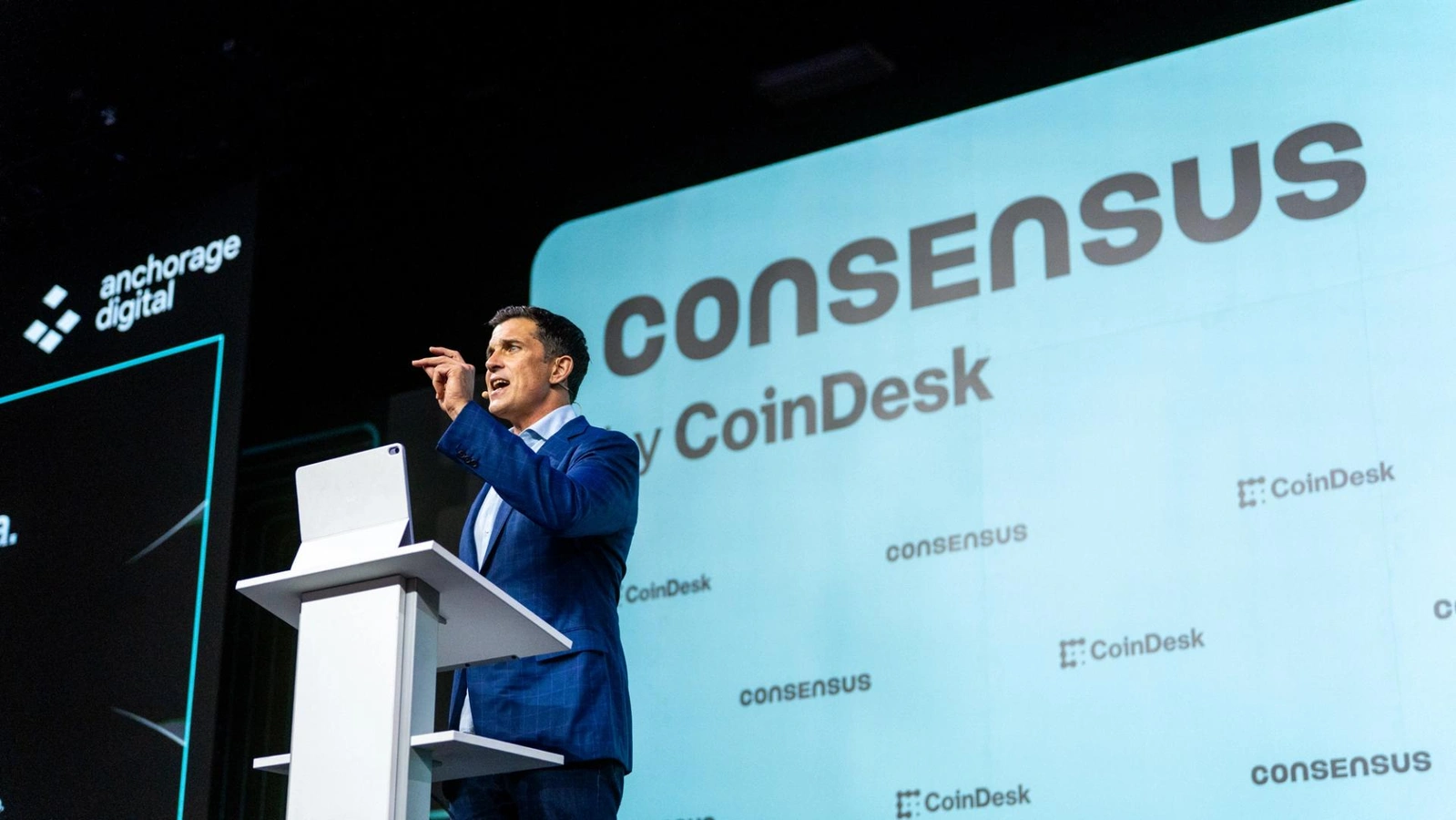
5 Bullish's acquisition of Equiniti is being called a potential tokenization play by analysts - turning a crypto exchange into a full-stack financial infrastructure provider.
Equiniti is a UK-based share registrar and investor services firm. It manages shareholder records, dividend payments, and corporate actions for hundreds of public companies. That's not a glamorous business - until you realize it's exactly the infrastructure layer that tokenized equities need to work. If Bullish can layer blockchain-based settlement and tokenized share issuance on top of Equiniti's existing corporate relationships, they're not just an exchange anymore. They're the pipe that connects traditional equity markets to on-chain settlement. That's the RWA thesis in its most concrete form. The risk: Equiniti is a legacy business with legacy costs. Integration is hard. And regulators in both the US and UK will have opinions. But the strategic logic is sound - distribution plus infrastructure beats either alone.
If Bullish announces a pilot tokenization program with any of Equiniti's existing corporate clients within 90 days, the acquisition thesis is executing. If the first 90 days are silent on product integration, the deal was about revenue diversification - not the tokenization vision analysts are projecting.
Trade any market, anywhere, any time.

News doesn’t take weekends off, neither should your portfolio. What about when the S&P moves 3% during your commute?
Liquid allows anyone to trade stocks, commodities, FX, pre-IPO companies, crypto, and more with up to 100X leverage, 24/7, from your phone or computer.
Any Market - Trade everything from Gold to Bitcoin, OpenAI to Nvidia, SK Hynix to JPY.
Anywhere - Liquid is available on iOS, Android, and desktop platforms, letting you trade from the subway, your office, and maybe even the bathroom.
Any Time - Liquid markets are open 24/7; so when an unprecedented event happens on Saturday, you can stay on top of your portfolio.
Active traders qualify for rewards each month!
Risk Map
01 Sentiment diverging from priceFear & Greed dropped 4 points to 46 on a day BTC hit a 3-month high. That's not how healthy rallies usually look. Either sentiment catches up - or price catches down. Historically, when the two diverge this sharply, price tends to be the one that corrects. |
02 BTC dominance climbing while alts lagBTC dominance up roughly 1 percentage point today means capital is concentrating, not spreading. If the macro catalyst (Iran deal) fades or proves incomplete, the same money that rotated into BTC rotates back out - and there's no altcoin cushion underneath. |
03 Approval exploit vector in DeFi still wide openEkubo's $1.4M WBTC drain via approval mechanics is the third approval-based exploit in 60 days. The attack surface is known, documented, and still being successfully exploited. Any DeFi position with unlimited token approvals is carrying more risk than the yield justifies. |
Catalysts (Next 7 Days)
📅 Arbitrum DAO frozen ETH release vote closes Thu May 7
The 'For' side leads with 99.2% of voting power - passage is near-certain. Once the frozen ETH is released, watch how Arbitrum's DAO treasury manages the funds and whether the resolution triggers any follow-on governance activity around the original legal dispute.
📅 CME Bitcoin Volatility Futures launch Week of May 6
CME's new product lets institutional traders take pure volatility exposure without managing options Greeks. First-week open interest will signal whether vol desks are ready to use it - or whether it needs a market catalyst to gain traction.

Sources
- Bitcoin cleared $82K for the first time in... decrypt.co
- Zcash surged 34% to $574 after Multicoin Capital... decrypt.co
- Zcash surged 34% to $574 after Multicoin Capital... coindesk.com
- Morgan Stanley is launching crypto trading with fees... coindesk.com
- CME Group is launching regulated Bitcoin volatility futures... decrypt.co
- Bullish's acquisition of Equiniti is being called a... coindesk.com
- Arbitrum DAO frozen ETH release vote closes coindesk.com
- coingecko.com coingecko.com
- defillama.com defillama.com
- stablecoins.llama.fi stablecoins.llama.fi
- alternative.me alternative.me
Disclosures
Not investment advice. For education only. Crypto is high risk. We may earn affiliate revenue from some links.
