
In partnership with




Token Metrics Premium
100,000+ Read the Brief. The Smartest Go Deeper.
Signals before they trend. Reports before they matter.
Playbooks before the market moves.
Weekly alpha signals · Premium reports · Monthly playbook · Private Discord
See What’s Included →From $49/mo · Or hold 1M+ $TMAI for free access
Lead Change
Scammers posed as Iranian officials. They demanded Bitcoin to let ships pass Hormuz. At least one vessel paid. Strategy just bought 34,000 BTC more. The market barely flinched.
Market Snapshot
BTC is treading water just under $76K while ETH continues its slow drift lower. BTC dominance at 58% tells you where conviction lives right now.
Narratives Snapshot
The Meme narrative is running hot — 51% in 7 days and a $53 billion market cap puts it in a category of its own. Everything else is moving, but nothing else is sprinting.
What Prediction Markets Think
Prediction markets are collectively pricing a world where the Fed stays hawkish, BTC stays well below $500K, and Strategy never sells. The macro bet is the one that matters most for crypto — low probability of rate cuts means the liquidity tailwind that drove 2024 gains isn't coming back soon.
Data from Polymarket prediction markets • Prices reflect real-money bets
This billionaire strategy beat the S&P 500 by 3.1x from 2017-2025. Here's how to get in.

That’s not by picking the right stock or timing the market. It’s by holding three real asset classes in one strategy.
It’s anchored by an investment typically exclusive to billionaires.
Could be good timing too–
Bloomberg's Marcus Ashworth recently wrote, there’s "no more reliable safe havens."
The S&P, while hovering over 5 year highs, fell over 7% from the February peak. Bonds might carry less risk but they are barely keeping pace with inflation.
The things supposed to protect your portfolio started moving together.
Meanwhile, the world's wealthiest have been setting records in postwar and contemporary art.
After the dot-com bust, it grew roughly 24% annually for a decade. After 2008, roughly 11% annually for 12 years.
It trades globally in multiple currencies, has scarce supply, and has shown near-zero correlation to equities since 1995.*
Masterworks has helped 70,000+ investors allocate $1.3B fractionally across 500+ artworks featuring Banksy, Basquiat, and Picasso.
See if you can improve your portfolio performance in one diversified strategy.
*According to Masterworks data. Investing involves risk. Past performance is not indicative of future returns. Important Reg A disclosures: masterworks.com/cd
5 Changes That Matter
1 Fraudsters impersonating Iranian Revolutionary Guard officials demanded Bitcoin and USDT from cargo ships near the Strait of Hormuz — and at least one vessel appears to have paid.
This is geopolitical risk wearing a crypto costume. The Strait of Hormuz handles roughly a fifth of global oil traffic, and now scammers have figured out that stranded ships in a tense military theater make perfect marks. The real tell here isn't the fraud itself — it's that the tactic worked. Someone on a commercial vessel, presumably with access to legal counsel and maritime security protocols, wired crypto to people pretending to be the Iranian military. That's not a technology failure. That's fear working exactly as intended. Chainalysis has been tracking the on-chain footprint. The broader implication: as crypto becomes more liquid and globally accessible, it becomes the preferred instrument for every flavor of extortion — state-sponsored, criminal, and the murky overlap between them.
If Chainalysis or law enforcement publicly traces these wallets to known sanctioned entities within the next 7 days, expect renewed pressure on OFAC compliance for crypto payment processors. If the story stays contained as a one-off scam, markets won't care — but the regulatory ammunition is now loaded.

2 Arbitrum's Security Council froze $71.5 million in ETH tied to the $292 million Kelp DAO exploit — but the attacker had already moved $175 million across chains before the freeze landed.
Think of it like showing up to a bank robbery after the getaway car is already on the highway. The Arbitrum Security Council did exactly what it was designed to do — and still only caught a fraction of the funds. The exploiter, linked by LayerZero to North Korea's Lazarus Group, had already bridged the majority of stolen assets across multiple chains before the freeze. Aave is staring at up to $230 million in potential losses from the incident. That's not a rounding error — that's a protocol-level stress test. The Kelp DAO and LayerZero teams are publicly blaming each other, which is never a great look when $292 million is missing. The real question isn't who's at fault. It's whether cross-chain bridge security has fundamentally improved since the Ronin and Wormhole hacks. The answer, based on this week's evidence, is: not enough.
If Aave governance posts a formal bad debt resolution proposal within the next 7 days, watch AAVE token reaction — a credible plan absorbs the hit, a vague one accelerates outflows. If the Lazarus attribution gets confirmed by a second on-chain forensics firm, expect U.S. Treasury to add new wallet addresses to the SDN list within 30 days.
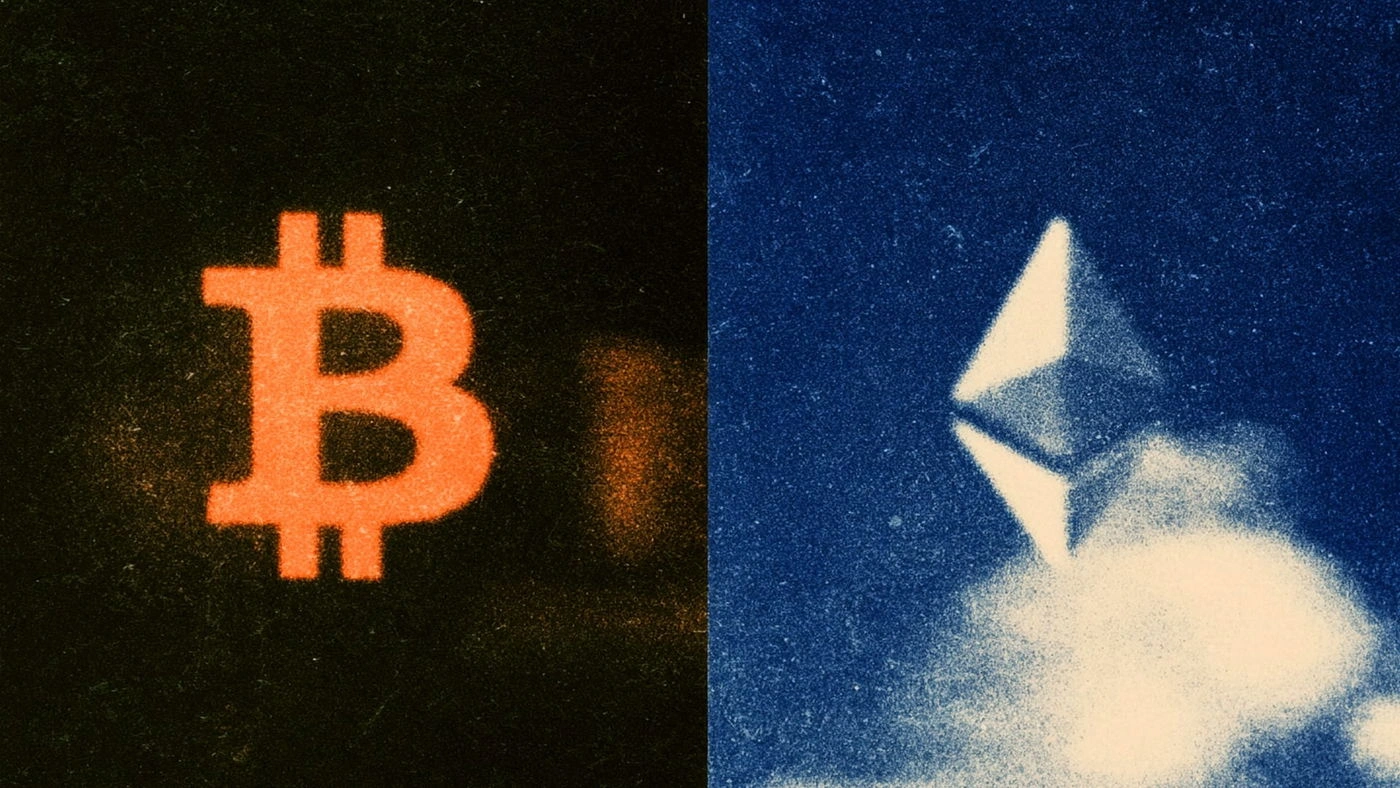
3 Strategy bought 34,000 BTC in its latest purchase while Bitmine crossed 4% of total ETH supply in its treasury — corporate crypto accumulation is accelerating on both sides of the BTC/ETH divide.
Strategy adding 34,000 BTC is the kind of number that should move markets. It didn't, not meaningfully. BTC is still grinding just under $76K. That's either a sign the market has fully priced in Saylor's buying program — or that the sellers on the other side of these trades are equally sized. Probably both. The more interesting development is Bitmine crossing 4% of ETH supply. That's a corporate treasury bet on ETH at a moment when ETH/BTC is near multi-year lows and the ETH narrative is under real pressure from L2 fee compression. Either Bitmine sees something the market doesn't, or they're catching a falling knife with institutional precision. The productive money thesis — that ETH staking yield makes it a superior treasury asset to BTC — is getting its first real stress test at scale.
If ETH holds above $2,200 while BTC consolidates near $76K over the next 7 days, the ETH treasury thesis gets a data point in its favor. If ETH breaks below $2,200 while BTC holds, Bitmine's thesis is immediately underwater and expect copycat corporate ETH accumulation to pause.

4 Almost 80% of Japanese institutional investors plan to add crypto to their portfolios by 2029, according to new survey data — while Japan's clearinghouse is already testing blockchain settlement for government bonds.
Japan is not a crypto-curious market. It's a crypto-serious market that moves slowly, then all at once. The country that gave us Mt. Gox and then built one of the world's most rigorous crypto licensing regimes is now watching its institutional money prepare to rotate in. 80% of institutional investors eyeing crypto by 2029 is a number that would be remarkable in any G7 country. In Japan — where institutional asset allocation is historically conservative and heavily weighted toward JGBs — it's a structural shift. Layer on top of that: Japan's Securities Clearing Corporation is actively testing blockchain settlement for government bonds. That's not a pilot program for press releases. That's infrastructure being built. When the pipes are ready, the water flows fast.
If Japan's FSA releases updated crypto allocation guidelines for institutional investors within the next 30 days, it signals the regulatory framework is catching up to the demand. If the JSCC blockchain bond pilot moves to production phase by Q3 2026, it becomes the first G7 sovereign bond settlement on-chain — and every RWA narrative gets a real-world anchor.

5 The UK published a plan to integrate stablecoin and tokenized deposit regulation into a unified payments framework, while South Korea's new central bank governor explicitly backed CBDCs and bank deposit tokens — and skipped stablecoins entirely in his first major address.
Two different countries, two very different bets on what digital money looks like. The UK is trying to build a tent big enough for both private stablecoins and bank-issued tokens — a pragmatic hedge that keeps TradFi happy while not shutting the door on crypto-native issuers. South Korea's new Bank of Korea governor is making a cleaner call: CBDCs and deposit tokens are the future, private stablecoins are not invited to the party. That's a meaningful signal from a country with one of the highest retail crypto adoption rates in the world. The divergence matters because it tells you where regulatory arbitrage will live. If the UK framework is genuinely permissive for stablecoin issuers, expect Circle and Tether to accelerate their London presence. If Korea's CBDC push gains momentum, it could squeeze out private stablecoin usage in one of crypto's most active retail markets.
If the UK Treasury publishes a draft stablecoin licensing framework within the next 30 days that includes foreign issuers, it's a direct competitive threat to the EU's Mi CA regime. If the Bank of Korea announces a CBDC pilot timeline within the next 7 days, watch for Korean won stablecoin volume on DEXs — a drop there would confirm retail is being steered toward the state option.
5 Quick Hits
- Meme narrative up 51% in 7 days, leading all crypto categories — Meme tokens now carry a combined market cap of $53 billion — the single strongest 7-day narrative move tracked, outpacing Rollups at 20% and DeFi at 12%, suggesting retail risk appetite is rotating into the highest-volatility corner of the market.
- John Gotti's grandson sentenced for funneling stolen COVID funds into crypto — The case resulted in a federal conviction for laundering pandemic relief fraud proceeds through crypto, adding to the growing body of case law that prosecutors are using to argue crypto is not an anonymous exit ramp for stolen funds.
- Bitcoin climbs as risk sentiment improves, altcoins hit by exploit concerns — BTC pushed back above $75,000 on April 21 as broader risk sentiment stabilized, while altcoins faced headwinds from the $292 million Kelp DAO exploit fallout — Aave's potential $230 million bad debt exposure weighed on DeFi tokens and kept capital rotating toward BTC rather than the broader market.
- Morning Minute: Saylor's $2.54B Buy Buoys Bitcoin — Strategy's latest 34,000 BTC purchase — valued at approximately $2.54 billion — was executed in the days leading up to April 21, bringing the company's total holdings to a level that could surpass Satoshi Nakamoto's estimated stack by September 2026. The buy provided a floor bid narrative for BTC near $76K even as macro uncertainty persisted.
- Bitcoin Resistance at $78K and $83K Could Cap Rally: Schwab — Schwab analysts identified $78,000 and $83,000 as the two key overhead resistance levels BTC must clear to confirm a sustained recovery, noting that both levels correspond to prior consolidation zones from Q1 2026 where significant sell-side volume accumulated — a failure to break $78K on the current attempt would likely push price back toward the $72,000–$74,000 range.
Risk Map
Catalysts (Next 7 Days)
Token Metrics Podcast
Read It Later. Hear It Now.
The Token Metrics Podcast turns the morning brief into a clean audio rundown of what changed, why it matters, and what to watch next.
What changed · Why it matters · What to watch next
Daily audio briefing · Spotify · Apple Podcasts · More
Sources
- Fraudsters impersonating Iranian Revolutionary Guard officials demanded Bitcoin... coindesk.com
- Strategy bought 34,000 BTC in its latest purchase... bankless.com
- Fraudsters impersonating Iranian Revolutionary Guard officials demanded Bitcoin... decrypt.co
- Fraudsters impersonating Iranian Revolutionary Guard officials demanded Bitcoin... chainalysis.com
- Arbitrum's Security Council froze $71.5 million in ETH... decrypt.co
- Arbitrum's Security Council froze $71.5 million in ETH... unchainedcrypto.com
- Arbitrum's Security Council froze $71.5 million in ETH... unchainedcrypto.com
- Arbitrum's Security Council froze $71.5 million in ETH... unchainedcrypto.com
- Arbitrum's Security Council froze $71.5 million in ETH... protos.com
- Strategy bought 34,000 BTC in its latest purchase... protos.com
- Strategy bought 34,000 BTC in its latest purchase... bankless.com
- Almost 80% of Japanese institutional investors plan to... coindesk.com
- The UK published a plan to integrate stablecoin... coindesk.com
- Kevin Warsh Fed Hearing coindesk.com
- api.coingecko.com api.coingecko.com
- api.coingecko.com api.coingecko.com
- api.llama.fi api.llama.fi
- Will Bitcoin reach $500,000 by December 31, 2026? polymarket.com
- Will 3 Fed rate cuts happen in 2026? polymarket.com
- MicroStrategy sells any Bitcoin by June 30, 2026? polymarket.com
Disclosures
Not investment advice. For education only. Crypto is high risk. We may earn affiliate revenue from some links.
