



Token Metrics Premium
100,000+ Read the Brief. The Smartest Go Deeper.
Signals before they trend. Reports before they matter.
Playbooks before the market moves.
Weekly alpha signals · Premium reports · Monthly playbook · Private Discord
See What’s Included →From $49/mo · Or hold 1M+ $TMAI for free access
Lead Change
BTC spikes to $72,084 (+5.37%). ETH surges +8.09%. A ceasefire did that. Morgan Stanley's Bitcoin ETF opens today at 0.14% — cheaper than BlackRock.
Market Snapshot
BTC cleared $72,000 on ceasefire news — the highest print in weeks. ETH outperformed at +8.09%, which is the kind of alt outperformance that shows up when risk appetite is genuinely back, not just leveraged.
Narratives Snapshot
The narrative leaderboard is flashing speculative rotation: DePIN up +33.29% and AI tokens up +24.41% in 7 days are the kind of numbers you see when risk appetite is back and capital is chasing the next story. Memes at.
What Prediction Markets Think
Prediction markets are telling a clear story: BTC at $72K is a bounce, not a breakout — all-time high odds by June sit at just 3.35%. Meanwhile, the Fed cut thesis is essentially dead at 1.6% for five cuts, meaning crypto's next leg up needs a catalyst that isn't monetary policy.
Data from Polymarket prediction markets • Prices reflect real-money bets
Sponsored

CCS — Breaking crypto news and exclusive crypto investor and startup interviews.
Subscribe to CCS Insider to win a Bitcoin 2026 pass →5 Changes That Matter

1 Morgan Stanley's MSBT Bitcoin ETF went live today with a 0.14% fee — the lowest in the market — backed by a $7 trillion wealth management machine. BlackRock's IBIT just met its first serious competition.
This isn't just another ETF. This is Morgan Stanley — the firm that manages the retirement accounts of half of corporate America — putting its distribution network behind a Bitcoin product cheaper than anything else on the shelf. IBIT charges 0.25%. MSBT charges 0.14%. In the fee-war math of institutional asset management, that gap is enormous at scale. The real play here isn't the launch day. It's the Morgan Stanley advisor network: tens of thousands of financial advisors who previously had to go out of their way to recommend IBIT can now recommend a house product. That's distribution, not just competition. BlackRock built the market. Morgan Stanley just showed up to take share.
If MSBT captures more than 10% of weekly Bitcoin ETF inflows within the next 7 days, the fee war is real and IBIT will face pressure to cut. If MSBT launches quietly with thin volume, it's a product in search of a distribution strategy — check back in 30 days.
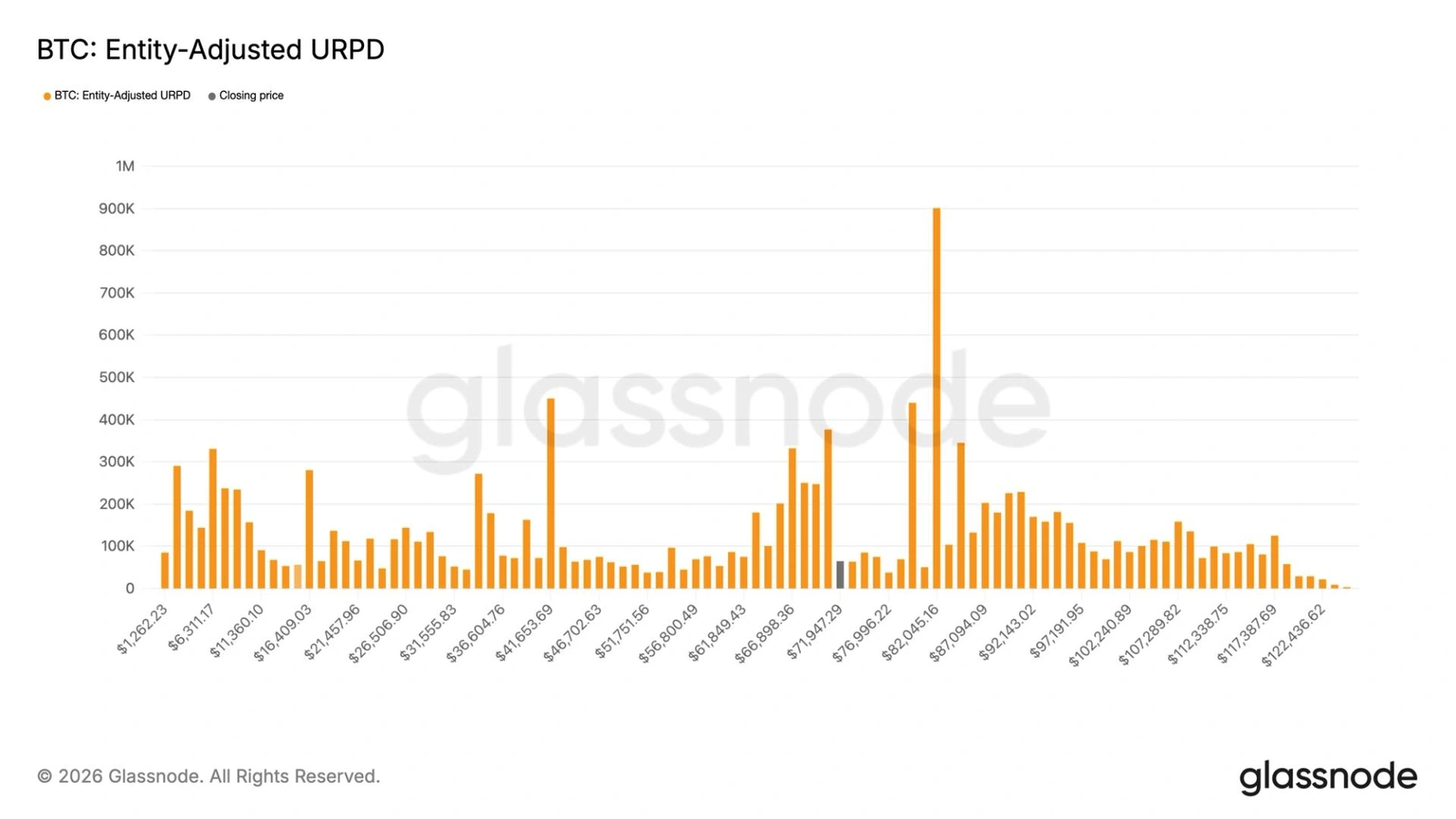
2 Trump announced a 2-week conditional ceasefire with Iran. Bitcoin spiked above $72,000. Oil tumbled. The market just told you exactly what it thinks the biggest macro risk was.
Here's what's interesting about this move: BTC didn't just go up — it went up while oil went down. That's a clean risk-on signal, not a safe-haven play. When crypto rallies on geopolitical de-escalation the same way equities do, it's trading like a risk asset, full stop. The ceasefire is conditional and two weeks long. That's not peace — that's a pause. The animal spirits that just woke up could go back to sleep fast if the ceasefire breaks. Meanwhile, the buyers who gobbled up nearly 850,000 BTC between $60,000 and $70,000 are now sitting on gains. Whether they hold or distribute into this strength is the question nobody's asking loudly enough yet.
If BTC holds above $70,000 for 48 hours after the ceasefire headline fades, the bid is structural. If it retraces below $68,000 by Friday, this was a macro headline bounce and the real demand test is still ahead.

3 Six major Swiss banks including UBS launched a Swiss franc stablecoin sandbox. Separately, South Korea is drafting stablecoin and RWA trust legislation. The traditional banking system is building its own on-ramp.
Two stories, one thesis: the stablecoin cold war between regulators and TradFi is over. TradFi won — and now they're building. A UBS-backed Swiss franc stablecoin isn't a crypto experiment. It's a bank deciding that programmable money is real infrastructure. South Korea drafting RWA trust laws is the same signal from the regulatory side: governments are trying to get ahead of tokenization rather than ban it. The interesting second-order here is what this means for pure-play stablecoin issuers like Circle and Tether. If UBS can issue a CHF stablecoin with full banking backing and regulatory blessing, the competitive moat for unregulated stablecoin issuers gets a lot narrower — fast.
Watch whether the GENIUS Act stablecoin framework in the US advances in the next 7 days. If it does, the UBS sandbox and South Korea's draft law form a coordinated global regulatory convergence. If the US stalls, the EU and Asia move first and US stablecoin issuers face a fragmented compliance nightmare.

4 The White House Council of Economic Advisers published a study finding that stablecoin yield products pose limited risk to small banks. Banning yield stablecoins would boost community bank lending by just 0.02%.
This is the White House essentially telling Congress: the scary stablecoin yield argument is a rounding error. The banking lobby has been pushing hard on the idea that yield-bearing stablecoins would drain deposits from community banks. The CEA just ran the numbers and said the effect is basically zero. That's a significant political signal ahead of GENIUS Act negotiations — it removes one of the strongest arguments against allowing stablecoin yield. For Circle, Coinbase, and anyone building yield products on stablecoins, this is the policy green light they've been waiting for. The FDIC's parallel proposal to create a supervised depository framework for stablecoin issuers is moving in the same direction. The regulatory tide shifted today.
If Senate Banking Committee markup of the GENIUS Act references the CEA study within the next 7 days, yield-bearing stablecoins are effectively cleared for US market. If the bill still strips yield provisions despite the CEA report, the banking lobby won the political fight regardless of the economics.

5 Solana DEX Stabble warned users to exit liquidity after a suspected North Korean developer mole was revealed. The Tornado Cash developer case also advanced as the DOJ rejected dismissal arguments.
Two security stories. One pattern. The Stabble situation is the Drift playbook: not a hack, an infiltration. North Korea doesn't need to break your code if they can get their people hired to write it. The warning to exit liquidity is the right call, but it raises the obvious question — how many other protocols have the same problem right now and don't know it yet? The Tornado Cash angle is different but equally important: the DOJ rejecting dismissal means the argument that writing privacy software isn't a crime is still losing in court. That's a chilling effect on every developer building privacy tools in crypto. The combination of state-sponsored infiltration and aggressive developer prosecution is making the security perimeter of DeFi look genuinely porous.
If Stabble publishes a full post-mortem within 72 hours confirming the scope of the compromise, watch whether other Solana DeFi protocols announce their own developer audits. If they go quiet, the industry is hoping the problem is isolated — and hoping is not a security strategy.
5 Quick Hits
- Binance announces new price guardrails to limit extreme volatility — Binance is adding circuit-breaker style protections on certain trading pairs — a move that reads as regulatory pre-emption as much as user protection, especially with global exchange scrutiny intensifying.
- Anthropic's secret Mythos AI model reportedly better than most humans at hacking — Anthropic's undisclosed Mythos model outperforms all but the most skilled human hackers at code exploitation — relevant for crypto because smart contract auditing and attack surface modeling just got a lot more complicated.
- Ceasefire lifts bitcoin, but animal spirits may not return just yet — Developing story.
- South Korea draft bill puts stablecoins, RWAs under finance laws: Report — Developing story.
- Thailand proposes tighter scrutiny of funders behind crypto firms — Developing story.
Risk Map
- 🔴 Ceasefire-driven euphoria is leverage refilling, not conviction: A 2-week conditional ceasefire is not a peace deal. The buyers who accumulated nearly 850,000 BTC between $60K-$70K are now in profit. If the ceasefire breaks or the macro narrative shifts, those holders have every incentive to distribute into strength — and leveraged longs chasing the move have no cushion.
- 🔴 DePIN and AI narrative surge (+33% and +24% 7d) signals speculative rotation, not fundamental demand: When the top-performing narratives are DePIN and AI tokens — not L1s, not stablecoins, not real yield — it usually means capital is chasing momentum rather than fundamentals. That's fine until it isn't. BTC dominance holding at 56.86% while alts rip suggests the rotation is early, but late-stage rotations look identical until they reverse.
- 🔴 North Korean developer infiltration in Solana DeFi is likely not isolated to Stabble: The Drift and Stabble incidents follow the same playbook: months-long insider access, not external hacks. If one protocol got a DPRK mole hired, the probability that others did too is non-trivial. A second major Solana DeFi exploit via insider access in the next 30 days would crater confidence in the entire ecosystem's hiring and security practices.
Catalysts (Next 7 Days)
- 📅 Morgan Stanley MSBT ETF first-week flow data (April 11-15, 2026): First weekly flow numbers will reveal whether Morgan Stanley's $7T distribution network is actually routing client money into MSBT or whether this is a product launch without a sales force behind it — the answer determines whether the ETF fee war is real.
- 📅 Iran ceasefire 2-week deadline (April 22, 2026 (end of 2-week window)): If the ceasefire holds, crypto gets a sustained macro tailwind. If it breaks before the deadline, expect a sharp risk-off reversal — the same geopolitical sensitivity that pumped BTC to $72K cuts both ways.
- 📅 GENIUS Act stablecoin framework Senate progress (Week of April 8-14, 2026): With the White House CEA clearing stablecoin yield products and the FDIC proposing a supervised depository framework, Senate Banking Committee movement on GENIUS Act this week could lock in the US regulatory structure for stablecoins — affecting Circle, Tether, and every yield product built on top of them.
Token Metrics Podcast
Read It Later. Hear It Now.
The Token Metrics Podcast turns the morning brief into a clean audio rundown of what changed, why it matters, and what to watch next.
What changed · Why it matters · What to watch next
Daily audio briefing · Spotify · Apple Podcasts · More
Sources
- Morgan Stanley's MSBT Bitcoin ETF went live today... coindesk.com
- decrypt.co decrypt.co
- Morgan Stanley's MSBT Bitcoin ETF went live today... bankless.com
- Trump announced a 2-week conditional ceasefire with Iran.... decrypt.co
- Trump announced a 2-week conditional ceasefire with Iran.... coindesk.com
- Six major Swiss banks including UBS launched a... coindesk.com
- The White House Council of Economic Advisers published... decrypt.co
- The White House Council of Economic Advisers published... bankless.com
- Solana DEX Stabble warned users to exit liquidity... decrypt.co
- Solana DEX Stabble warned users to exit liquidity... protos.com
- Solana DEX Stabble warned users to exit liquidity... decrypt.co
- api.coingecko.com api.coingecko.com
- api.coingecko.com api.coingecko.com
- defillama.com defillama.com
- polymarket.com polymarket.com
- polymarket.com polymarket.com
- polymarket.com polymarket.com
Disclosures
Not investment advice. For education only. Crypto is high risk. We may earn affiliate revenue from some links.
