


Token Metrics Premium
100,000+ Read the Brief. The Smartest Go Deeper.
Signals before they trend. Reports before they matter.
Playbooks before the market moves.
Weekly alpha signals · Premium reports · Monthly playbook · Private Discord
See What’s Included →From $49/mo · Or hold 1M+ $TMAI for free access
Lead Change
The SEC just said crypto wallet software isn't a broker. Three years of developer fear, gone in one staff bulletin. BTC sits at $72K. Crypto funds just had their best week since January. Someone should've bet on this.
Market Snapshot
Bitcoin is holding at $72K after a weekend that briefly spooked markets. Hyperliquid is the standout mover at +5.5% — the only large-cap name with real momentum today.
Narratives Snapshot
Meme tokens are the week's loudest signal at +16%, with GameFi close behind at +13%. Everything infrastructure — AI, DePIN, Rollups — is flat to slightly negative.
What Prediction Markets Think
Prediction markets are telling a calm story: BTC stays in range, Powell keeps his job, and nobody's paying up for tail risks in either direction. The symmetry between the $85K upside bet and the $55K crash bet — both sitting near 5% — suggests the market has genuinely no strong directional conviction for the rest of April.
Data from Polymarket prediction markets • Prices reflect real-money bets
Sponsored
Kraken — Institutional-grade security since 2011 with zero major hacks.
Trade Securely Now →5 Changes That Matter
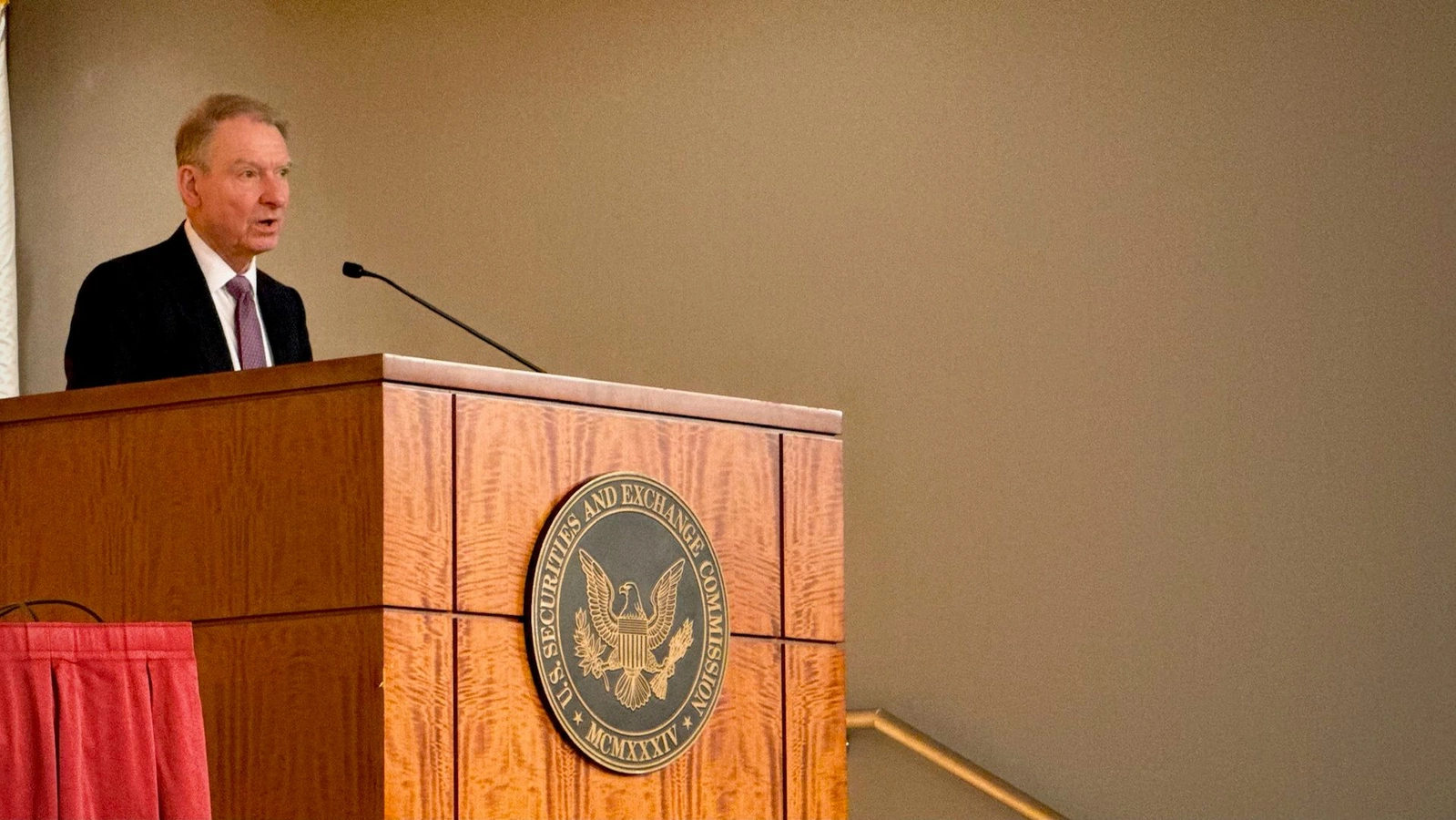
1 The SEC just ruled that software enabling crypto wallet transactions doesn't qualify as a broker — exempting non-custodial interfaces from mandatory registration requirements.
This is the regulatory equivalent of finding out the IRS doesn't actually want to audit you. For three years, developers building wallet interfaces, DEX front-ends, and self-custody tools lived under the threat that they might need to register as broker-dealers — a compliance burden that would have killed most projects before they launched. The SEC's staff bulletin carves out a path: if you're software that facilitates transactions but doesn't hold custody, you're not a broker. That's a structurally significant distinction. It won't stop every enforcement action, but it draws a line developers can actually build behind. The Coincenter crowd has been fighting for exactly this outcome for years. They got it.
If DEX front-end projects that went dark or restricted US users start re-opening access within the next 30 days, the ruling has real teeth. If enforcement actions against non-custodial interfaces continue anyway, the staff bulletin is guidance, not protection — and the legal fight moves to court.

2 Crypto funds posted their best week of inflows since January, with both Bitcoin and Ethereum ETF products seeing surging investment.
Context matters here. The last time flows were this strong was January — the post-ETF-approval honeymoon period. Since then, the market has been grinding through macro noise, trade war anxiety, and a weekend geopolitical scare that briefly pushed BTC toward $71K. The fact that institutional money came back in size during a week that included a naval blockade headline is actually the more interesting data point. Either allocators are buying the dip on macro fear, or they've decided crypto is now a hedge rather than a risk asset. Those are two very different theses. One is tactical. The other is structural.
If inflows sustain for a second consecutive week while BTC dominance stays above 55%, institutions are accumulating — not just rebalancing. If inflows reverse next week as macro headlines cool, it was a tactical dip-buy, not a regime change.

3 Kraken disclosed it was targeted in an extortion attempt — an attacker claimed to have client data and demanded payment. Kraken says no breach occurred and no client funds were at risk.
The playbook here is familiar: attacker claims they have data, demands crypto, threatens to publish. Kraken's response — 'we won't pay criminals' — is the right call, and they deserve credit for disclosing it publicly rather than quietly hoping it goes away. The more interesting question is what data the attacker actually had. Unverified claims of a breach are noise. Verified partial data is a different story. Until Kraken or an independent party confirms what was actually accessed, the 'no breach' statement is reassuring but not conclusive. Security incidents at major exchanges tend to come in waves. Worth watching whether other exchanges report similar contact in the next 7 days.
If Kraken publishes a detailed incident report within 7 days confirming exactly what data the attacker possessed, the story closes. If other exchanges report similar extortion attempts this week, this is a coordinated campaign targeting the industry — not a one-off.

4 Circle's CEO said publicly that he will not freeze USDC without a court order — even when hackers walk away with millions in stolen funds.
This is a genuinely uncomfortable position to defend, and the CEO is defending it anyway. The argument is principled: if Circle freezes funds based on unilateral requests — from governments, from exchanges, from anyone — then USDC isn't a neutral payment rail, it's a permissioned ledger with a kill switch. That's a different product. The tradeoff is real: some hack victims won't get their money back because Circle won't act without judicial process. But the alternative — a stablecoin issuer that freezes on demand — creates a different kind of systemic risk. Bankers are already pushing back on the White House's claim that stablecoin yield doesn't threaten deposits. The Circle CEO's stance adds another dimension: stablecoins are now making philosophical arguments about censorship resistance that banks never had to make.
If Congress references Circle's freeze policy in upcoming stablecoin legislation hearings within the next 30 days, the CEO's statement becomes a lobbying liability. If the GENIUS Act or similar bills include mandatory freeze provisions, Circle faces a choice between compliance and its stated principles.

5 White House crypto advisors say the list of 'unsolvable issues' blocking crypto legislation has shrunk significantly — signaling momentum toward passing a market structure bill.
The political weather in Washington has shifted faster than most people expected. Twelve months ago, crypto legislation was stuck behind partisan disagreement on everything from DeFi to stablecoin yield to SEC jurisdiction. Now the White House is publicly saying the blockers are clearing. That's not the same as a bill passing — legislative optimism has a long history of dying in committee. But the combination of the SEC's broker exemption today and White House advisors telegraphing momentum is a coordinated signal. The Treasury Secretary calling resistant crypto leaders 'nihilists' last week adds color: the administration wants a win here, and they're willing to name names to get it.
If the Senate Banking Committee schedules a floor vote on the CLARITY Act or a comparable market structure bill within the next 30 days, the momentum is real. If the timeline slips past June without a scheduled vote, treat the optimism as positioning, not progress.
5 Quick Hits
- Meme tokens up 16% in 7 days — GameFi close behind at 13% — Risk appetite is back in the corners of the market that move fastest — meme narratives are outperforming every infrastructure category this week, which historically signals either a local top or the early stage of a broader altcoin run.
- Polymarket trader turns $500 into $252K on a UFC scoring error — A prediction market bettor cashed out after the UFC reversed a judge's scorecard — a reminder that Polymarket's edge isn't just crypto; it's any event where official bodies make correctable mistakes.
- StarkWare fires staff after Starknet revenue collapses 98% — When your L2's revenue falls that far that fast, the headcount math stops working — Starknet's struggles are a reminder that not every scaling solution finds product-market fit before the runway runs out.
- Jito and Koda team up on institutional staking in South Korea — Institutional staking infrastructure is expanding into Asian markets — South Korea's regulated crypto environment makes it a meaningful test case for whether institutional yield products can scale outside the US.
- Attacker mints $1 billion in fake Polkadot tokens on Ethereum, steals only $250K — The gap between tokens minted and value extracted tells the real story: liquidity constraints and slippage protection meant a massive-looking exploit netted the attacker a fraction of the headline number.
Risk Map
Catalysts (Next 7 Days)
Token Metrics Podcast
Read It Later. Hear It Now.
The Token Metrics Podcast turns the morning brief into a clean audio rundown of what changed, why it matters, and what to watch next.
What changed · Why it matters · What to watch next
Daily audio briefing · Spotify · Apple Podcasts · More
Sources
- The SEC just ruled that software enabling crypto... coindesk.com
- Crypto funds posted their best week of inflows... decrypt.co
- The SEC just ruled that software enabling crypto... bankless.com
- Kraken disclosed it was targeted in an extortion... coindesk.com
- Kraken disclosed it was targeted in an extortion... decrypt.co
- Circle's CEO said publicly that he will not... coindesk.com
- Circle's CEO said publicly that he will not... coindesk.com
- White House crypto advisors say the list of... bankless.com
- White House crypto advisors say the list of... unchainedcrypto.com
- api.coingecko.com api.coingecko.com
- api.coingecko.com api.coingecko.com
- api.llama.fi api.llama.fi
- polymarket.com polymarket.com
- polymarket.com polymarket.com
- polymarket.com polymarket.com
Disclosures
Not investment advice. For education only. Crypto is high risk. We may earn affiliate revenue from some links.
